ASG Eye Hospital Highlights Retinoblastoma Awareness for Early Detection Saves Vision
Understanding Retinoblastoma: Why Early Detection Can Save a Child’s Sight
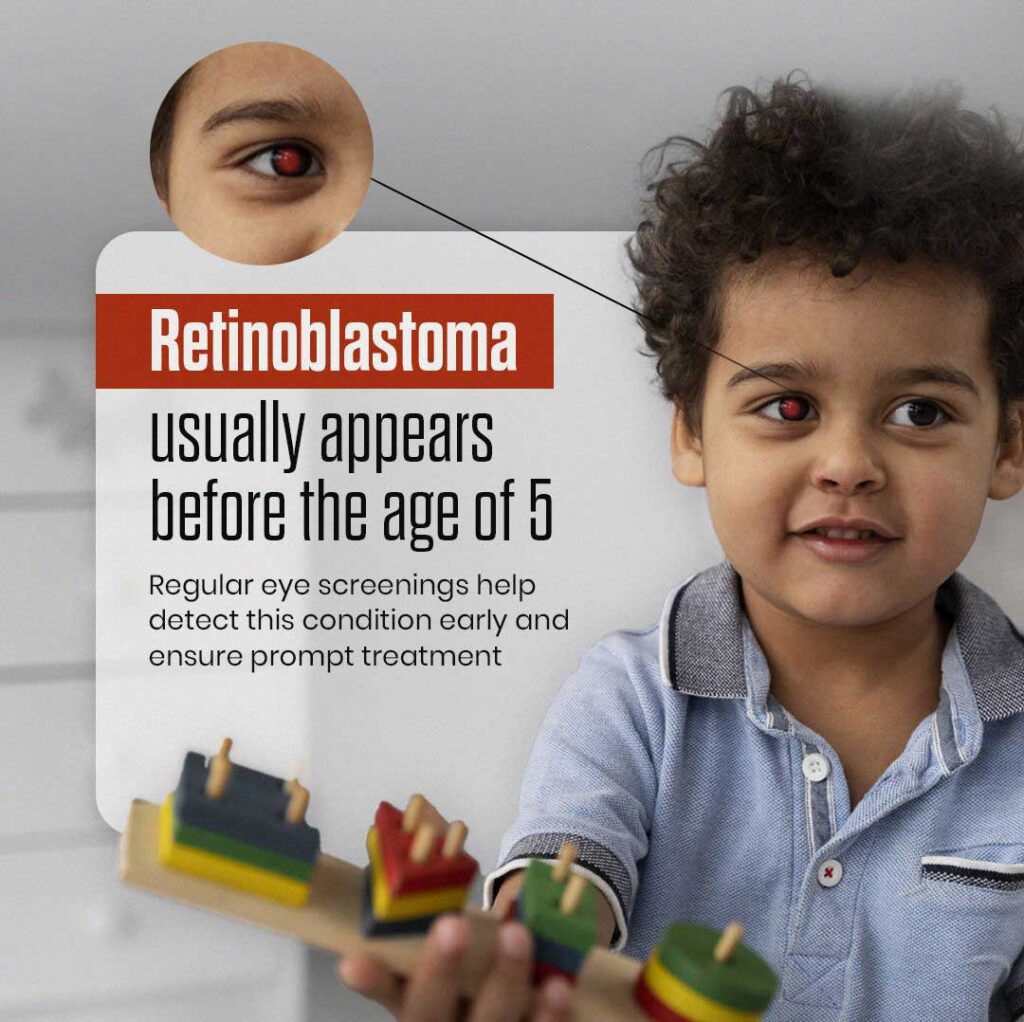
In a world where pediatric health is increasingly prioritized, one silent threat continues to affect children under the age of five: retinoblastoma. This rare but aggressive form of eye cancer originates in the retina and, if left untreated, can lead not only to vision loss but also to life-threatening metastasis. Recently, ASG Eye Hospital took a significant step forward by launching a dedicated awareness campaign emphasizing that early detection is the single most critical factor in preserving both vision and life.
As a specialist in ophthalmic care, I have seen firsthand how a delay in diagnosis transforms a treatable condition into a devastating outcome. The reality is that retinoblastoma is highly curable when caught early—with survival rates exceeding 95% in developed nations. However, in many parts of India, late presentation remains the norm. This article unpacks the key insights from ASG Eye Hospital’s initiative, the warning signs every parent must know, and the clinical advancements that are changing the prognosis for affected children.
What Is Retinoblastoma? A Clinical Overview
Retinoblastoma arises from the immature cells of the retina, the light-sensitive tissue at the back of the eye. It is the most common intraocular malignancy in childhood, affecting approximately 1 in 15,000 to 20,000 live births worldwide. The disease can present in two forms:
- Hereditary (germline) form: Accounts for about 40% of cases. These children carry a mutation in the RB1 gene and are at risk for bilateral eye involvement as well as secondary cancers later in life.
- Non-hereditary (sporadic) form: Accounts for 60% of cases. These children typically have unilateral disease, and the mutation occurs only in the tumor cells.
The critical point here is that retinoblastoma does not discriminate. It can affect any child, regardless of socioeconomic background or geographic location. What separates a good outcome from a catastrophic one is the speed at which the diagnosis is made.
The Window of Opportunity: Why Time Is Tissue
In pediatric oncology, the concept of a “therapeutic window” is paramount. For retinoblastoma, this window is frighteningly small. Tumor growth can double in size within weeks. When confined to the eye, the cancer can be treated with laser therapy, cryotherapy, or intra-arterial chemotherapy—all of which spare the globe and preserve useful vision.
However, once the tumor extends beyond the eye into the optic nerve or the orbit, the prognosis worsens dramatically. Enucleation (surgical removal of the eye) becomes necessary, and survival rates plummet. ASG Eye Hospital’s campaign drives home this exact point: early detection is not just about saving vision—it is about saving lives.
The Five Warning Signs Every Parent Must Know
One of the greatest challenges in retinoblastoma management is that early symptoms are subtle and often mistaken for benign conditions. ASG Eye Hospital’s awareness drive has emphasized a simple mnemonic that I urge every parent and pediatrician to internalize.
The five cardinal signs of retinoblastoma include:
- Leukocoria (White Pupillary Reflex): Also known as “cat’s eye reflex,” this is the most common presenting sign. Instead of the normal red reflex when a light is shone into the eye, you see a white or yellowish glow. This is often first noticed in photographs.
- Strabismus (Crossed or Wandering Eye): Any misalignment of the eyes that persists beyond the first few months of life should be evaluated. Retinoblastoma can cause the affected eye to deviate inward or outward.
- Redness or Inflammation: Persistent redness, swelling, or discharge in one eye without an obvious infectious cause should raise suspicion.
- Poor Vision or Loss of Visual Tracking: If a child older than three months does not follow objects or shows no interest in visual stimuli, an ophthalmological exam is warranted.
- Pain or Glaucoma-like Symptoms: Advanced tumors can cause increased intraocular pressure, leading to pain, tearing, and sensitivity to light.
I cannot stress enough that the presence of even one of these signs—especially leukocoria—demands an immediate examination under anesthesia by a pediatric ophthalmologist. Do not wait for a “second opinion” from a general practitioner who may not be familiar with this disease.
How ASG Eye Hospital Is Driving Change in Community Awareness
The recent initiative by ASG Eye Hospital is not merely a press release; it represents a structured, multi-pronged approach to bridge the gap between clinical expertise and public awareness. Their strategy focuses on three critical pillars:
1. Training Primary Care Physicians and Pediatricians
General practitioners are often the first point of contact for concerned parents. Yet, many have never performed a proper red reflex test. ASG Eye Hospital is conducting workshops to teach basic ophthalmoscopy techniques to primary care doctors, ensuring that the index of suspicion for retinoblastoma remains high during routine checkups.
2. Leveraging Digital and Social Media Campaigns
The hospital has launched targeted online content—including videos demonstrating the difference between a normal red reflex and leukocoria—designed to be shared across WhatsApp and social platforms. This is a genius move, given that most parents today document their children’s growth through photographs. By teaching families what to look for in their own photos, ASG is effectively crowdsourcing early detection.
3. Establishing Rapid Referral Pathways
Perhaps the most impactful initiative is the creation of a 24/7 hotline and dedicated consultation slots for suspected retinoblastoma cases. In ophthalmology, the difference of even two weeks can mean the difference between eye-sparing therapy and enucleation. This system eliminates bureaucratic delays that often plague public health systems.
Modern Treatment Modalities: What Early Detection Unlocks
If a child is diagnosed when the tumor is still intraocular (confined within the eye), the treatment landscape today is vastly superior to what it was even a decade ago. Let me break down the primary options that become available when detection is timely.
For small to medium tumors:
- Laser Photocoagulation: Uses a thermal laser to destroy the blood supply to the tumor.
- Cryotherapy: Freezing the tumor from the outer surface of the eye, effective for peripheral lesions.
- Transpupillary Thermotherapy (TTT): Combines heat and laser to target the tumor directly.
For larger or multiple tumors:
- Intra-arterial Chemotherapy (IAC): A catheter is threaded from the groin into the ophthalmic artery, delivering high-dose chemotherapy directly to the eye while minimizing systemic side effects. This has revolutionized care and saved countless eyes from enucleation.
- Intravitreal Chemotherapy: Injecting medication directly into the vitreous cavity for tumors that have seeded into the eye’s gelatinous interior.
For advanced unilateral disease:
- Systemic Chemotherapy (IV): Used to shrink large tumors before local therapy, or to treat metastatic spread.
- Enucleation: While not ideal, it remains a life-saving procedure when the eye is blind and the tumor has destroyed all functional tissue. Modern prosthetics, however, allow for excellent cosmetic rehabilitation.
The common thread is this: every one of these less invasive, vision-preserving options requires that the tumor be caught while it is still small and localized. That is the fundamental reason ASG Eye Hospital’s awareness work is so critical.
The Role of Genetic Counseling and Long-Term Surveillance
A point that is often overlooked in general discussions about retinoblastoma is the importance of genetic testing. ASG Eye Hospital’s campaign wisely includes this component. For children with the hereditary form, the risk extends beyond the eye.
- For the child: Lifelong surveillance for second primary cancers, such as osteosarcoma or melanoma, is required.
- For the family: Siblings and future offspring have a 50% risk of inheriting the RB1 mutation. Genetic counseling and prenatal testing can help families make informed reproductive decisions.
In my practice, I have seen families who never knew about this genetic component until a second child was diagnosed years later. This is preventable education.
A Call to Action for Parents and Practitioners
As a clinician who has treated children with retinoblastoma for over a decade, I can state unequivocally that the most heartbreaking cases are those that could have been saved by a two-minute examination during a routine checkup. ASG Eye Hospital’s initiative is not just commendable—it is a template for how the entire medical community should approach pediatric cancer.
If you are a parent, do not ignore the white glow in your child’s eye, even if it appears only in flash photographs. If you are a pediatrician, make the red reflex test a non-negotiable part of every well-child visit from birth onward. And if you are reading this, share this information. Awareness is not passive; it is the first step in a chain of actions that ends with a child seeing their fifth birthday with both eyes intact.
Retinoblastoma is curable. The question is whether we will detect it in time.