Phacolytic Glaucoma: Causes, Symptoms, and Treatment
Phacolytic glaucoma develops from a condition most people associate with blurry vision, not eye emergencies: the cataract. When a cataract advances far enough, it can trigger a sudden, painful rise in eye pressure. This form of glaucoma is rare, but understanding it matters, especially for anyone who has delayed cataract surgery for years.
How a Cataract Leads to Glaucoma
A cataract forms when the eye’s natural lens clouds over time, usually due to aging. In most cases, this clouding stays contained within the lens capsule, a thin membrane surrounding the lens. Vision blurs gradually, but eye pressure remains unaffected.
In phacolytic glaucoma, the cataract reaches an advanced, “hypermature” stage. At this point, the lens capsule becomes porous. Lens proteins, now degraded and liquefied, leak out through microscopic openings in the capsule. These leaked proteins enter the fluid-filled space at the front of the eye.
The eye’s immune system responds to these proteins as foreign material. White blood cells rush in to clear them, along with the protein debris itself, and this combined material clogs the eye’s drainage system. Fluid can no longer exit at a normal rate. Pressure builds quickly, sometimes within days.
Who Develops Phacolytic Glaucoma
This condition affects people with cataracts that have gone untreated for an extended period, often years. It appears more frequently in regions where access to cataract surgery is limited or delayed, since hypermature cataracts rarely form in places where surgery happens early.
Older adults face the highest risk, simply because cataracts take years to reach the hypermature stage. Anyone who has noticed severe, longstanding vision loss in one eye, without ever pursuing cataract surgery, falls into a higher-risk group.
Symptoms That Signal This Condition
Phacolytic glaucoma tends to appear suddenly, unlike the slow progression of the cataract that caused it.
- Sudden eye pain, often intense
- Redness across the eye
- Significant vision loss, beyond the blur already caused by the cataract
- Light sensitivity
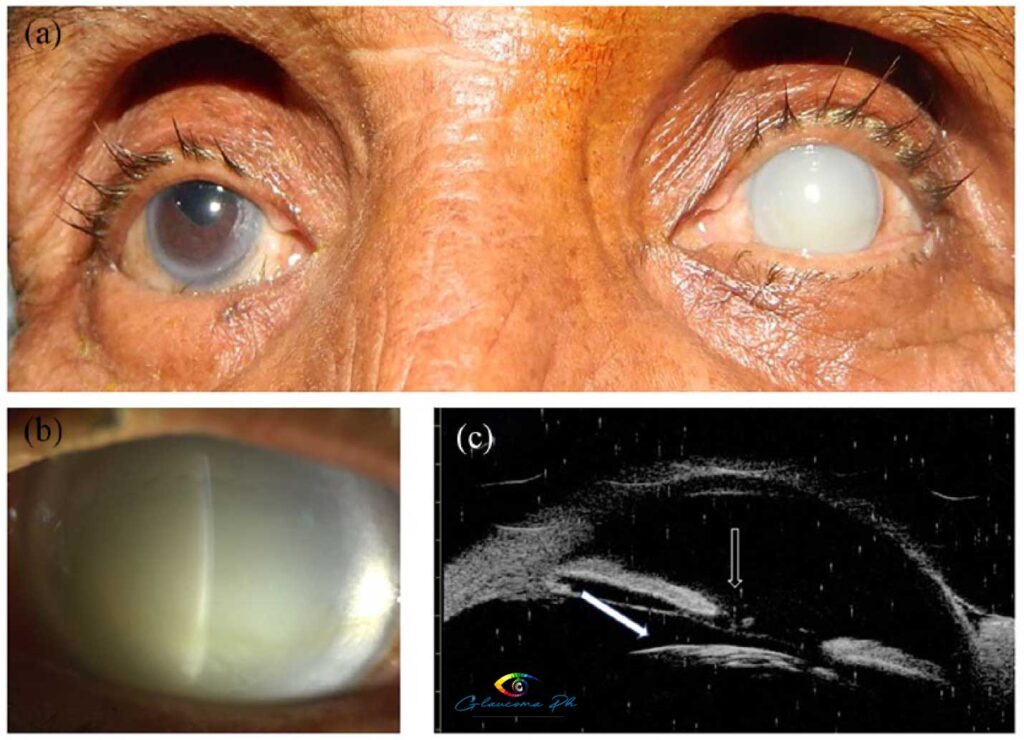
- A visibly cloudy or white-appearing lens
Because the underlying cataract has already caused major vision loss, some patients mistake the new pain and redness for an unrelated problem, or assume nothing more can be done. This delay in seeking care allows pressure to remain elevated longer, increasing the risk of permanent optic nerve damage.
How Doctors Diagnose Phacolytic Glaucoma
Diagnosis relies on a combination of exam findings. A slit-lamp exam reveals the hypermature cataract along with signs of inflammation in the front chamber of the eye. Tonometry confirms elevated pressure, often significantly higher than typical glaucoma readings. The doctor also looks for characteristic debris floating in the eye’s fluid, a sign that distinguishes phacolytic glaucoma from other pressure-related emergencies.
Because symptoms overlap with other acute eye conditions, an accurate diagnosis depends on recognizing the hypermature cataract as the root cause, not just treating the pressure spike in isolation.
How Phacolytic Glaucoma Differs From Other Glaucoma Emergencies
Acute angle-closure glaucoma and phacolytic glaucoma can look similar at first glance: both involve sudden pain, redness, and a sharp rise in eye pressure. The distinction matters because treatment paths diverge.
Angle-closure glaucoma stems from a structural problem, a drainage angle that physically closes off. Phacolytic glaucoma stems from a chemical and inflammatory problem, protein leakage clogging the drainage system while the angle itself often remains open. A doctor confirms this difference through gonioscopy, which examines the angle directly, combined with the visible hypermature cataract that points specifically toward phacolytic glaucoma.
This distinction changes the treatment sequence. Angle-closure cases often need a laser procedure to open the drainage angle. Phacolytic cases need cataract removal as the definitive fix, since the angle itself is not the source of the blockage.
Treatment Approach
Medication brings pressure down as a first step, using drops or oral treatments similar to those used in other glaucoma emergencies. This stabilizes the eye enough to proceed safely to the definitive treatment: cataract surgery.
Removing the cataract eliminates the source of the leaking proteins, which resolves the underlying cause rather than just managing symptoms. Once the cataract is removed, eye pressure typically returns to normal, and the inflammation clears.
Delaying surgery, even after pressure is controlled with medication, risks a repeat episode. The hypermature lens continues to leak protein material until it is removed.
Why Early Cataract Treatment Prevents This
Phacolytic glaucoma illustrates why cataract surgery timing matters beyond vision clarity alone. Modern cataract surgery is safe and widely available, and waiting years past the point of significant vision loss carries real risk, not just inconvenience.
Anyone with a longstanding, severe cataract, particularly one left untreated for years, should discuss surgical timing with an eye doctor, even if daily vision feels manageable. Catching the need for surgery early avoids the pain, urgency, and added risk that come with a phacolytic glaucoma episode.