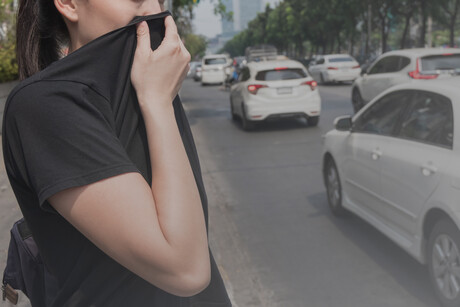
How Air Pollution May Affect Your Eye Health
Your eyes can feel irritated after spending hours beside busy roads, in heavy traffic or around smoke. While temporary redness and watering may be noticeable, scientists are also investigating whether long-term exposure to polluted air could contribute to more serious health problems.
A report published by LabOnline on October 14, 2026, describes research linking air pollution exposure with increased risks of glaucoma and cataracts. The findings also discuss separate research associating certain environmental pollutants with suicidal thoughts, suicide attempts and deaths by suicide.
These findings do not establish that pollution directly causes every condition examined. However, they strengthen the case for investigating environmental exposures as potential contributors to eye disease and other health outcomes.
What Researchers Found About Glaucoma and Cataracts
The eye health findings came from a systematic review and meta-analysis led by Dr Ahmed Alnabihi of King Khaled Eye Specialist Hospital and Research Center in Saudi Arabia. He presented the research at the 44th Congress of the European Society of Cataract and Refractive Surgeons (ESCRS), held the previous month.
The research combined evidence from 41 observational studies involving millions of people across East Asia and the United Kingdom. Investigators examined several pollutants, including fine particulate matter (PM2.5), larger particulate matter (PM10), nitrogen dioxide (NO2), sulfur dioxide (SO2), ozone (O3) and carbon monoxide (CO).
The researchers reported that people living in areas with the highest levels of fine particulate pollution had up to 70% higher odds of glaucoma than those in the least polluted areas. This figure describes a comparison in odds, not a 70-percentage-point increase in an individual’s absolute probability of developing the disease.
The analysis also found a consistent relationship between greater pollution exposure and cataract risk. According to the report, each meaningful increase in exposure was associated with approximately an 8% rise in glaucoma risk and a 4% rise in cataract risk.
Evidence concerning age-related macular degeneration (AMD), another condition that affects central vision, was less consistent. Some studies supported a possible association, but the findings did not establish the same level of consistency across all eye diseases.
Why Fine Particulate Matter May Harm the Eyes
Fine particulate matter consists of tiny airborne particles released by sources such as vehicle exhaust, smoke and industrial activity. PM2.5 refers to particles measuring 2.5 micrometres or less in aerodynamic diameter, allowing them to penetrate deeply into the respiratory system.
Researchers are particularly interested in these particles because they may contribute to inflammation and oxidative stress. Oxidative stress occurs when harmful reactive molecules overwhelm the body’s protective systems, potentially damaging cells and tissues over time.
In glaucoma, the main concern is damage to the optic nerve, which carries visual information from the eye to the brain. The disease can gradually reduce peripheral vision and may eventually cause severe, irreversible vision loss if it progresses untreated.
Cataracts develop when the normally clear lens inside the eye becomes cloudy. This can cause blurred vision, glare, faded colours and difficulty seeing clearly, especially at night.
The eye’s direct contact with the surrounding environment provides a plausible reason to investigate pollution-related damage. The tear film, conjunctiva and cornea are exposed to outdoor air, although this does not mean that every pollutant reaches the lens or optic nerve directly.
Importantly, an association between exposure and disease does not prove that pollution is the sole cause. Age, genetics, smoking, existing health conditions and other environmental or lifestyle factors may also influence a person’s risk.
Air Pollution and Mental Health: What the Separate Research Suggests
The LabOnline report also describes a separate investigation published in the Journal of Epidemiology & Community Health. Researchers at the Centre for Public Health, Queen’s University Belfast, examined whether environmental pollution might be associated with suicidal behaviour and deaths by suicide.
The team searched research databases for English-language studies published between January 2010 and April 2024. Of 287 initially identified studies, 45 met the eligibility criteria: 33 examined deaths by suicide, seven investigated suicidal thoughts and five focused on suicide attempts.
The pooled analyses found statistically significant associations involving short-term exposure to PM2.5 in 13 studies and PM10 in seven studies. Long-term exposure to PM2.5, examined in six studies, and NO2, examined in seven studies, was also associated with the studied suicide-related outcomes.
A narrative review of 16 studies suggested possible positive associations involving additional pollutants, including sulfur dioxide and ozone, as well as noise pollution. However, the researchers could not pool the water and light pollution evidence because too few studies were available and their outcome measures differed.
The findings require careful interpretation. Differences in study design, the relatively small number of studies for individual outcomes and other potential confounding factors make it difficult to determine whether pollution itself explains the observed relationships.
For example, communities experiencing higher pollution may also face unemployment, economic disadvantage or limited access to mental health services. These factors can affect mental health independently, making further research necessary before drawing firm conclusions about causation.
Protecting Your Eyes and Knowing When to See a Doctor
Although individuals cannot eliminate outdoor pollution on their own, some practical steps may reduce exposure. Check local air-quality reports, limit strenuous outdoor activity when pollution levels are particularly high, and consider choosing walking or exercise routes away from heavily trafficked roads when practical.
Indoor ventilation and air filtration may also be worth considering when outdoor air quality is poor. Follow local public-health guidance, particularly if you have an existing respiratory or cardiovascular condition.
These measures should complement, rather than replace, regular eye examinations. Glaucoma can develop without obvious early symptoms, so waiting for blurred vision or pain is not a reliable way to identify it.
An eye examination may include tonometry to measure intraocular pressure, optic nerve assessment, visual field testing and optical coherence tomography (OCT) to evaluate retinal nerve fibre layers. Gonioscopy may also be used to examine the drainage angle of the eye when clinically appropriate.
Seek an eye-care professional’s advice if you notice persistent blurred vision, increasing difficulty seeing at night, or changes in your visual field. Sudden severe eye pain, a red eye accompanied by blurred vision, halos around lights, headache, nausea or vomiting can indicate an eye emergency and require immediate medical assessment.
Anyone experiencing suicidal thoughts or concerned about another person’s immediate safety should seek urgent support from local emergency services or a qualified mental health professional. Environmental research should never replace individual assessment and timely mental health care.
Frequently Asked Questions
Can air pollution cause glaucoma?
Current research suggests an association between greater air pollution exposure, particularly PM2.5, and higher glaucoma risk. Observational findings cannot establish that pollution directly causes the disease, and other risk factors remain important.
Does air pollution increase the risk of cataracts?
The research reviewed by LabOnline found a consistent association between higher pollution exposure and cataract risk. More research is needed to clarify the effects of individual pollutants and determine how much exposure contributes to disease development.
Should I have an eye examination if I live in a polluted area?
Living in a polluted area does not automatically mean you have an eye disease. However, regular comprehensive eye examinations are useful for detecting glaucoma and other conditions, particularly if you have additional risk factors or notice changes in your vision.
What to Do Next
The emerging evidence on air pollution and eye health reinforces the importance of both personal prevention and wider environmental action. Cleaner transport, reduced industrial emissions and effective air-quality policies may offer benefits beyond respiratory and cardiovascular health, although the precise effects on eye disease still need to be established.
If you are concerned about your vision, arrange a comprehensive eye examination rather than relying on symptoms alone. At the same time, follow local air-quality advisories and take reasonable steps to limit exposure when pollution levels are elevated.