BYD’s God’s Eye Self-Driving System Faces Major Technical Setbacks
The race for autonomous driving supremacy is a marathon, not a sprint, and even the frontrunners can stumble. BYD, the Chinese electric vehicle giant that recently dethroned Tesla in global EV sales, is facing a significant hurdle in its quest for technological dominance. Its highly anticipated advanced driver-assistance system (ADAS), dubbed “God’s Eye,” is reportedly running into serious technical problems, casting a shadow over its planned rollout and highlighting the immense complexity of achieving true self-driving capability.
While BYD has built its empire on the pillars of battery technology and manufacturing scale, the autonomous software arena represents a new and formidable battlefield. The reported setbacks with God’s Eye serve as a stark reminder that hardware prowess alone is not enough to navigate the intricate world of sensor fusion, AI decision-making, and real-world unpredictability.
What is BYD’s “God’s Eye” System?
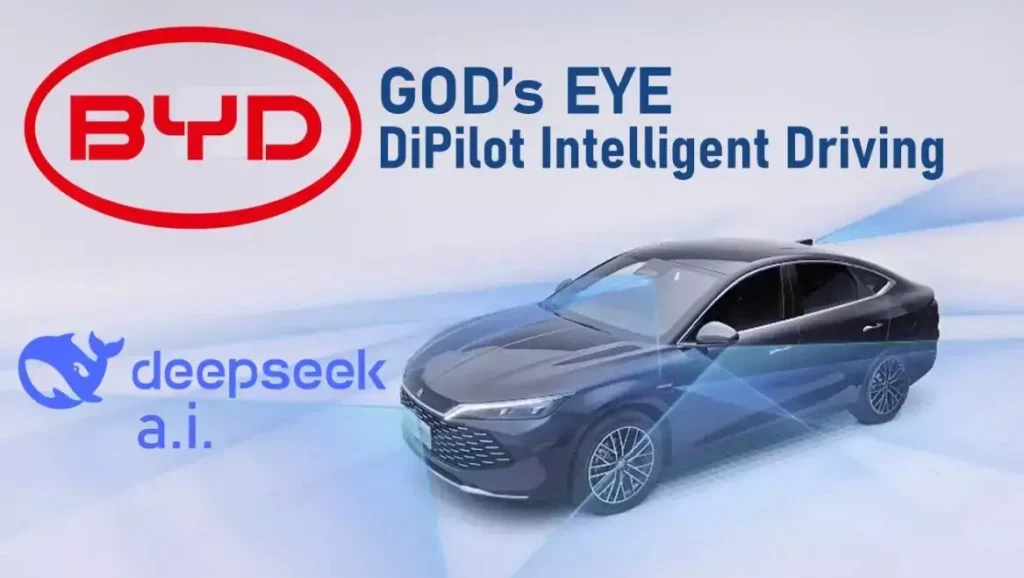
Announced with great fanfare, the God’s Eye system is BYD’s answer to Tesla’s Full Self-Driving (FSD), Huawei’s ADS, and Xpeng’s XNGP. Its name is derived from its ambitious sensor suite, which is designed to perceive the vehicle’s surroundings with near-omniscient clarity. The system relies on a powerful combination of:
- Lidar: Multiple lidar units for precise 3D mapping and object detection, especially in poor lighting conditions.
- Radar: An array of radars to accurately gauge the speed and distance of objects, crucial for highway driving.
- Cameras: A network of high-resolution cameras for visual recognition, lane keeping, and traffic sign reading.
- Proprietary AI Chips: BYD has invested heavily in its own semiconductor division to produce the processing brain, named “Xuanji,” meant to handle the massive data influx from all these sensors.
The goal was to create a sensor-fusion powerhouse that could overcome the limitations of camera-only systems (like Tesla’s) and deliver a safe, reliable, and eventually, hands-free driving experience. It was a cornerstone of BYD’s strategy to move upmarket and compete on technology, not just cost.
The Nature of the “Serious Problems”
While BYD has not issued an official statement detailing the failures, reports from internal testing and industry analysts point to several core technical challenges that have stalled development.
Sensor Fusion and Data Overload
The primary issue appears to lie at the very heart of the system’s design: effectively fusing data from dozens of sensors. Integrating inputs from lidar, radar, and cameras—each with different refresh rates, formats, and blind spots—into a single, coherent, and real-time understanding of the world is a monumental software challenge. The system is reportedly struggling with “data dissonance“—situations where different sensors provide conflicting information, leading to hesitation, incorrect path planning, or system disengagement.
AI and Decision-Making Lag
The “Xuanji” AI chip and the algorithms running on it are facing criticism for not processing information quickly or intelligently enough. In complex urban environments—with erratic pedestrians, scooters, and complex intersections—the system is said to be slow to make critical decisions. This latency, measured in milliseconds, is the difference between a smooth maneuver and a dangerous situation. The AI’s ability to predict the behavior of other road users, a key component of advanced autonomy, is reportedly not yet up to par with leading competitors.
Real-World Reliability and “Corner Cases”
Like all ADAS systems, God’s Eye is being tripped up by “corner cases“—rare, unexpected scenarios. These could include unusual construction zones, extreme weather conditions like heavy rain or fog that obscure sensors, or erratic animal behavior. Reports suggest the system’s performance degrades significantly outside of ideal conditions, raising questions about its readiness for nationwide deployment in a geographically and climatically diverse country like China.
The Competitive and Strategic Fallout
These technical hiccups come at a critical time. The Chinese ADAS market is fiercely competitive, with players like Huawei, Xpeng, and Li Auto making significant strides and already rolling out advanced navigation-guided pilot functions to customers. Every month of delay allows competitors to refine their systems, gather more real-world data, and solidify their reputation for technological leadership.
For BYD, the stakes are high. The company has masterfully dominated the mass-market EV segment. However, to protect its margins and brand prestige in the long term, it needs to succeed in the high-tech software arena. God’s Eye is not just a feature; it’s a statement. Persistent problems could:
- Delay the launch of premium models that rely on this tech as a key selling point.
- Damage consumer and investor confidence in BYD’s software capabilities.
- Force the company into costly partnerships or acquisitions to bridge the technology gap.
What’s Next for BYD and God’s Eye?
Setbacks in autonomous driving are the norm, not the exception. Tesla’s FSD has been through years of iterative, and often controversial, development. The question is not if BYD will face problems, but how it responds.
The likely path forward involves a combination of:
- Intensified Software Development: Doubling down on algorithm refinement, simulation testing, and focused data collection for corner cases.
- Strategic Patience: Possibly scaling back initial rollout plans from a “city-to-city” autonomous driving promise to a more robust but geographically limited highway pilot system first.
- Continued Hardware Evolution: Iterating on the sensor suite and processing chip for better performance and efficiency.
A Reality Check for the Industry
BYD’s struggle is a microcosm of the entire autonomous driving industry’s journey. It underscores that building a car is fundamentally different from creating its driving brain. Manufacturing scale and battery innovation do not automatically translate into software excellence. The path to true autonomy remains long, winding, and littered with technical, regulatory, and ethical challenges.
For now, BYD’s God’s Eye system appears to be grounded, its all-seeing vision clouded by the harsh realities of artificial intelligence and real-world physics. How quickly and effectively the company can clear these clouds will be a defining test of its ambition to be a holistic technology leader, not just the world’s biggest EV maker. The automotive world is watching closely, as the outcome will influence not just BYD’s future, but the competitive dynamics of the global race to self-driving cars.