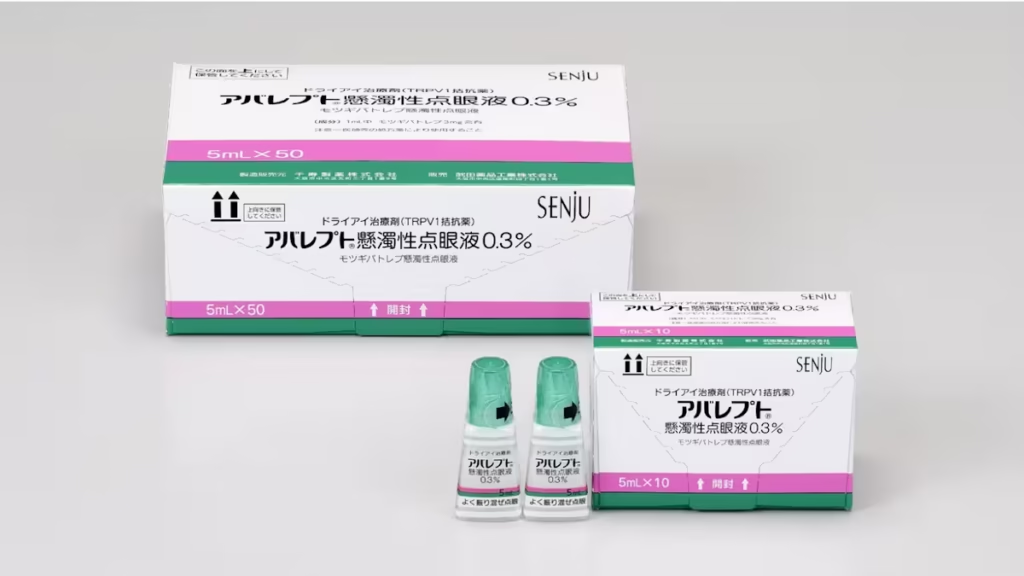
Senju Launches Innovative First-in-Class Dry Eye Drug in Japan
For the millions in Japan suffering from the persistent discomfort of dry eye disease (DED), a new era of treatment has dawned. Senju Pharmaceutical Co., Ltd. has officially launched **TWYNA®**, a groundbreaking first-in-class drug offering a novel mechanism of action that moves beyond simple lubrication to target the underlying inflammation that drives the condition. This launch represents a significant leap forward in ophthalmic care, providing a new tool for patients and physicians grappling with this increasingly common ailment.
Beyond Lubrication: A New Approach to a Complex Disease
Dry eye disease is far more than just an occasional feeling of grittiness. It is a chronic, multifactorial condition characterized by a loss of homeostasis on the eye’s surface. This instability leads to inflammation, damage to the ocular surface, and a vicious cycle of discomfort, visual disturbance, and tear film instability. For years, mainstay treatments have primarily focused on symptom relief through artificial tears, anti-inflammatory agents like corticosteroids, or immunomodulators.
TWYNA® (generic name: reproxalap) shatters this conventional approach. It is the world’s first and only reactive aldehyde species (RAS) inhibitor approved for treating dry eye disease. This innovative science targets a fundamental driver of ocular inflammation and dysfunction at the cellular level.
How the New Drug Works: Targeting the Root Cause
The key to understanding TWYNA®’s innovation lies in the concept of reactive aldehyde species (RAS). These highly inflammatory mediators are produced in cells on the ocular surface in response to various stressors like environmental factors, screen time, or underlying health issues. RAS accumulation is directly linked to:
- Increased inflammation
- Disruption of healthy tear production
- Damage to the delicate cells of the eye’s surface
By inhibiting RAS, reproxalap acts upstream in the inflammatory cascade. It effectively quiets the inflammatory engine that perpetuates dry eye disease, addressing the root cause rather than just the symptoms. This mechanism offers the potential to restore ocular surface health and break the cycle of chronic dryness and irritation.
Clinical Evidence: Demonstrated Efficacy and Rapid Relief
The approval and launch of TWYNA® are backed by robust clinical evidence demonstrating its benefits for dry eye sufferers. Clinical trials showed that the drug achieved its primary endpoints, offering both statistically significant and clinically meaningful improvements.
Notably, one of the most compelling findings from the studies was the speed of symptom relief. Patients reported a rapid reduction in the sensation of eye dryness—in as little as a matter of minutes after application in some assessments. This fast-acting property addresses a critical patient need for immediate relief from the constant discomfort of DED. Furthermore, trials confirmed sustained reductions in ocular redness and improvements in other key signs and symptoms of the disease over longer treatment periods.
The Significance for Japan’s Dry Eye Population
The launch in Japan addresses a substantial and growing medical need. Factors such as an aging population, high screen usage, and environmental conditions contribute to a high prevalence of dry eye disease in the country. Many patients struggle with inadequate relief from existing therapies, which may not be suitable for long-term use due to side effects or may simply be insufficient for moderate to severe cases.
TWYNA® enters the market as a novel prescription eye drop that offers a well-tolerated, targeted therapeutic option. Its unique mechanism provides ophthalmologists with a new strategic tool, particularly for patients with inflammatory-driven dry eye who have not found success with traditional lubricants alone.
Quotes from Leadership and Future Outlook
In statements surrounding the launch, Senju Pharmaceutical emphasized the drug’s revolutionary nature. Company leadership highlighted that TWYNA® is the culmination of pioneering research into the role of aldehydes in inflammatory diseases. They expressed hope that this new treatment will “greatly contribute to improving the quality of life for many patients suffering from dry eye disease.”
The launch in Japan is just the beginning. Senju, along with its partner Aldeyra Therapeutics, is actively pursuing regulatory approvals in other major markets, including the United States, where a New Drug Application (NDA) is under review by the FDA. The global rollout of TWYNA® has the potential to redefine the standard of care for dry eye disease on an international scale.
What This Means for Patients and Eye Care Professionals
For individuals battling the daily challenges of dry eye, the arrival of TWYNA® is a beacon of hope. It signifies a move towards more sophisticated, cause-targeted therapies. Patients experiencing persistent symptoms—such as burning, stinging, redness, sensitivity to light, or blurred vision—should consult their ophthalmologist to discuss if this new treatment option is appropriate for their specific condition.
For eye care professionals, the introduction of a first-in-class RAS inhibitor enriches the therapeutic arsenal. It allows for a more personalized treatment approach, enabling doctors to prescribe a drug that directly modulates a key inflammatory pathway involved in DED pathology. Continuing medical education on this novel mechanism will be key to its successful integration into clinical practice.
Conclusion: A Paradigm Shift in Dry Eye Therapy
The launch of Senju’s TWYNA® in Japan marks a definitive paradigm shift in the management of dry eye disease. By moving beyond symptomatic relief to directly inhibit the reactive aldehyde species that fuel inflammation, this first-in-class drug offers a fundamentally different and promising solution. It combines a novel scientific approach with demonstrated clinical benefits, including the potential for rapid relief.
As this innovative treatment becomes available to patients, it not only alleviates suffering but also advances our collective understanding of ocular surface disease. The story of TWYNA® is a powerful reminder of how targeted biomedical innovation can transform patient care, turning chronic discomfort into manageable health and restoring clarity and comfort to the simple act of seeing the world.