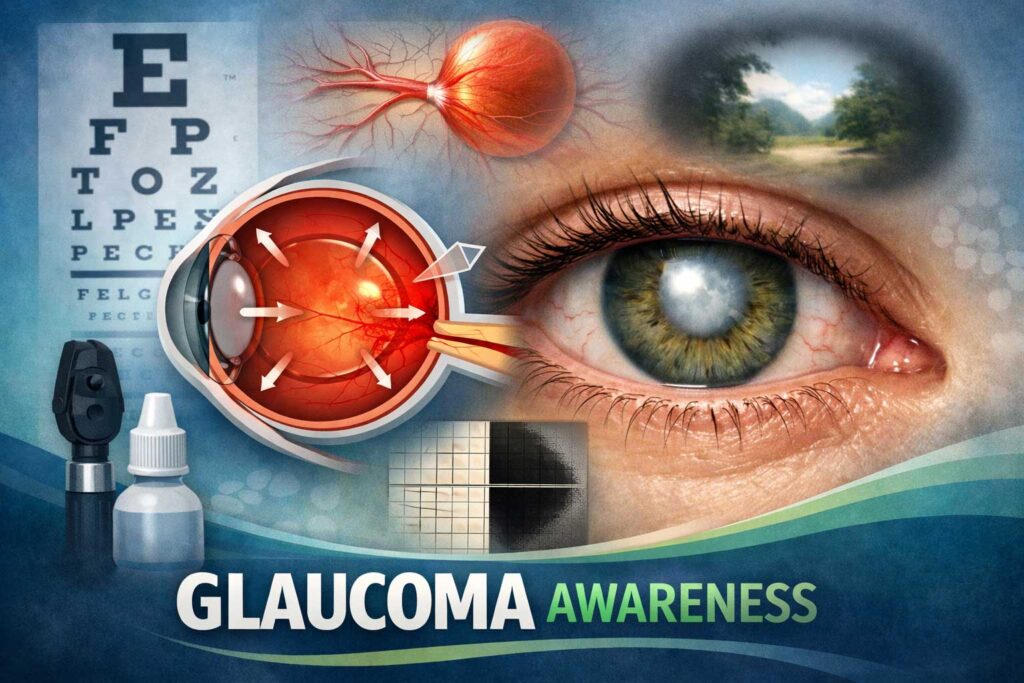
How Fovea-Disc Distance Affects Glaucoma Scan Accuracy
Glaucoma is a leading cause of irreversible blindness, and early detection is key to preventing vision loss. One of the main tools used to detect glaucoma is optical coherence tomography (OCT), which measures the thickness of the retinal nerve fiber layer (RNFL).
However, scan accuracy can be affected by natural differences in eye anatomy—especially the fovea-disc distance (FDD), or the distance between the fovea and the optic disc.
This article explains how FDD influences scan results and why it matters in glaucoma diagnosis.
Understanding Fovea-Disc Distance (FDD)
The fovea is responsible for sharp central vision, while the optic disc is where the optic nerve exits the eye. The distance between them varies from person to person due to factors like eye size, axial length, and genetics.
Why FDD Matters
RNFL measurements are typically taken in a circular scan around the optic disc. If the FDD differs from the average:
-
The scan may not align properly with the retina
-
Natural RNFL patterns may be misread
-
Results may show false positives or false negatives
How FDD Affects OCT Scan Accuracy
1. RNFL Thickness Measurements
Eyes with a longer FDD often appear to have thinner RNFL, while a shorter FDD may show thicker readings. Since OCT compares results to standard databases, this can lead to inaccurate interpretations.
2. Diagnostic Limitations
Most OCT devices use preset scan patterns. When FDD falls outside the normal range, the scan may:
-
Miss early signs of glaucoma
-
Overestimate or underestimate disease progression
3. High Myopia and Larger Eyes
Patients with high myopia usually have longer eyes, which increases FDD. This may result in:
-
Incorrect RNFL segmentation
-
Misinterpretation of glaucoma severity
How to Improve Scan Accuracy
1. Customized Scanning
Adjusting OCT settings based on individual anatomy can improve results. This includes:
-
Repositioning scan alignment
-
Modifying scan size or diameter
2. Combining Tests
Using OCT together with visual field tests provides a more complete and reliable diagnosis.
3. Advanced Imaging Tools
New OCT systems with AI can account for anatomical differences like FDD, helping produce more accurate results.
Clinical Importance
1. Include FDD in Exams
Measuring FDD during routine eye exams can:
-
Reduce the risk of misdiagnosis
-
Help tailor patient monitoring
2. Educate Patients
Patients with unusual FDD should understand that:
-
Their scans may need adjustments
-
Follow-up tests may be required
Conclusion
Fovea-disc distance plays an important role in glaucoma scan accuracy. Variations can lead to incorrect results, especially in patients with high myopia or unusual eye anatomy.
By using customized scans, combining diagnostic methods, and applying advanced imaging tools, eye care professionals can improve accuracy and detect glaucoma earlier.
Better understanding of FDD helps ensure more reliable diagnoses and better outcomes for patients.