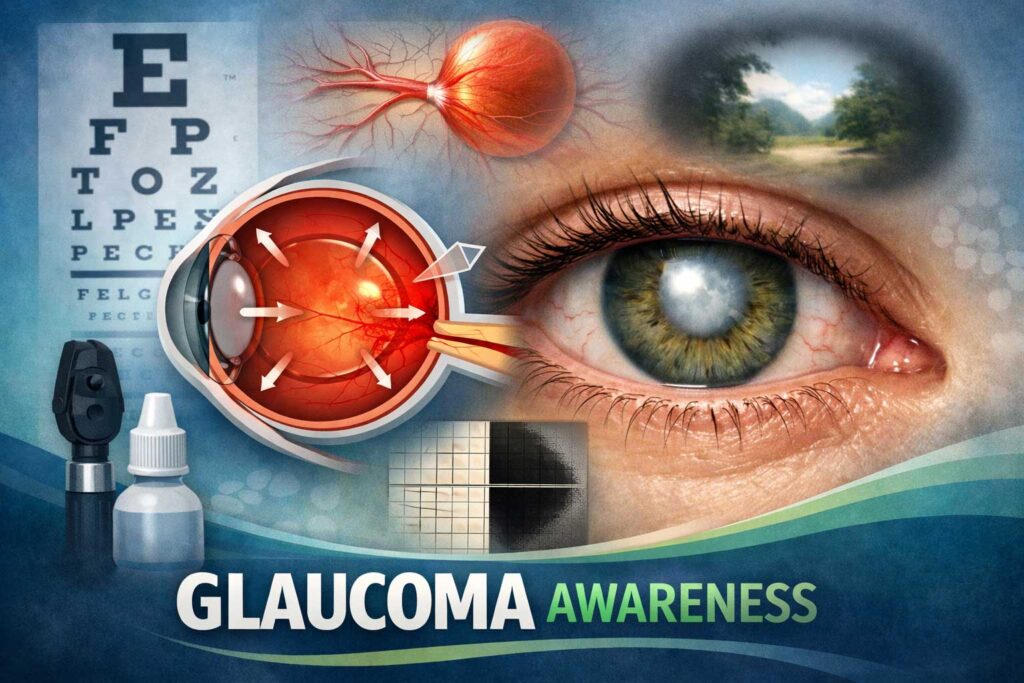
Glaucoma is a leading cause of irreversible blindness worldwide, often called the “silent thief of sight” due to its gradual and often symptomless progression. While factors like age, elevated intraocular pressure, and lifestyle are well-known contributors, genetics also plays a critical role. Understanding the glaucoma genetic risk is essential for early detection, prevention, and management.
Understanding Glaucoma
Glaucoma refers to a group of eye conditions that damage the optic nerve, the crucial pathway that transmits visual information from the eye to the brain. If untreated, this damage can lead to progressive vision loss and, eventually, blindness. There are several types of glaucoma, including:
- Primary Open-Angle Glaucoma (POAG): The most common form, characterized by slow optic nerve damage.
- Angle-Closure Glaucoma: A sudden increase in intraocular pressure that requires urgent medical attention.
- Normal-Tension Glaucoma: Optic nerve damage occurs even with normal eye pressure.
- Congenital Glaucoma: Present at birth, often caused by genetic mutations.
Recognizing the type of glaucoma is essential in determining the role of genetics in its onset.
Genetics and Glaucoma: What the Research Shows
Recent research confirms that genetics significantly contributes to glaucoma risk. Studies reveal that individuals with a family history of glaucoma are at a higher risk of developing the condition. This is particularly true for Primary Open-Angle Glaucoma (POAG).
Several gene mutations have been linked to glaucoma, including:
- MYOC (Myocilin) Gene: Mutations in MYOC are associated with juvenile and adult-onset glaucoma. These mutations can lead to elevated intraocular pressure by affecting the drainage of aqueous humor in the eye.
- OPTN (Optineurin) Gene: Linked to normal-tension glaucoma, OPTN mutations can affect optic nerve health even when eye pressure is normal.
- TBK1 Gene: Rare duplications in this gene have been identified in families with normal-tension glaucoma.
These discoveries emphasize that glaucoma is not solely influenced by environmental factors or age—it also has a strong hereditary component.
Understanding Glaucoma Genetic Risk
Glaucoma genetic risk refers to the likelihood of developing glaucoma based on inherited gene variants. Key points include:
- Individuals with a first-degree relative (parent, sibling, or child) with glaucoma are three to nine times more likely to develop the condition.
- The risk increases if multiple family members are affected or if glaucoma onset occurred at a younger age.
- Certain ethnic groups, including individuals of African, Hispanic, or Asian descent, show higher genetic susceptibility.
Understanding your genetic risk allows for early monitoring, which is crucial because glaucoma often progresses silently. Regular eye exams, especially for those with a family history, can prevent irreversible damage.
Genetic Testing for Glaucoma
With advances in medical technology, genetic testing has become increasingly accessible. Genetic tests can identify mutations in MYOC, OPTN, and other glaucoma-related genes, helping doctors assess an individual’s glaucoma genetic risk. While not all glaucoma cases are hereditary, testing can:
- Identify high-risk individuals before symptoms appear.
- Guide personalized treatment plans.
- Inform family members about their potential risk.
However, genetic testing should complement—not replace—regular eye exams. Glaucoma is a complex disease influenced by multiple genes and environmental factors.
Lifestyle and Environmental Factors
While genetics is important, lifestyle and environmental factors also affect glaucoma risk. These include:
- Age: Risk increases after 40 years.
- High Intraocular Pressure (IOP): A major modifiable risk factor.
- Medical Conditions: Diabetes, hypertension, and heart disease may increase susceptibility.
- Medication and Eye Injury: Long-term steroid use or trauma can contribute to glaucoma development.
Understanding both genetic and environmental risk factors allows for a comprehensive approach to glaucoma prevention and management.
Early Detection and Prevention
Early detection is critical because glaucoma-related vision loss is irreversible. Those with a known family history should undergo regular eye exams, including:
- Tonometry: Measures eye pressure.
- Ophthalmoscopy: Examines the optic nerve for damage.
- Visual Field Testing: Detects early loss of peripheral vision.
- Optical Coherence Tomography (OCT): Provides detailed images of the optic nerve and retinal layers.
By combining knowledge of glaucoma genetic risk with proactive monitoring, patients can significantly reduce the likelihood of severe vision loss.
Treatment Options
Glaucoma management depends on the type and severity of the disease. Common treatments include:
- Medications: Eye drops to lower intraocular pressure.
- Laser Therapy: Procedures such as trabeculoplasty to improve fluid drainage.
- Surgery: For advanced or unresponsive cases, procedures like trabeculectomy or glaucoma drainage implants are used.
Even for those with a strong hereditary risk, adherence to treatment and lifestyle modifications can slow disease progression and protect vision.
The Future of Glaucoma Genetics
Ongoing research in glaucoma genetics offers hope for more personalized medicine. Scientists are exploring:
- Gene Therapy: Targeting specific mutations to prevent optic nerve damage.
- Stem Cell Research: Regenerating damaged retinal ganglion cells.
- Predictive Analytics: Using genetic data to forecast glaucoma onset and progression.
These innovations could transform glaucoma care, particularly for those with a high genetic risk.
Key Takeaways
- Glaucoma has a strong hereditary component, especially for Primary Open-Angle Glaucoma.
- Genetic mutations in MYOC, OPTN, and TBK1 genes can increase susceptibility.
- Individuals with a family history should undergo early and regular eye exams.
- Lifestyle modifications, timely treatment, and monitoring can prevent severe vision loss.
- Advances in genetic research may lead to personalized therapies and improved outcomes.
Conclusion
Glaucoma is more than just an age-related eye condition—it’s a complex disease influenced by both genetics and environmental factors. Understanding your glaucoma genetic risk is essential for early detection, proactive management, and protecting your vision for the long term. With ongoing research and advances in genetic testing, the future of glaucoma care looks promising, offering hope to those at risk.