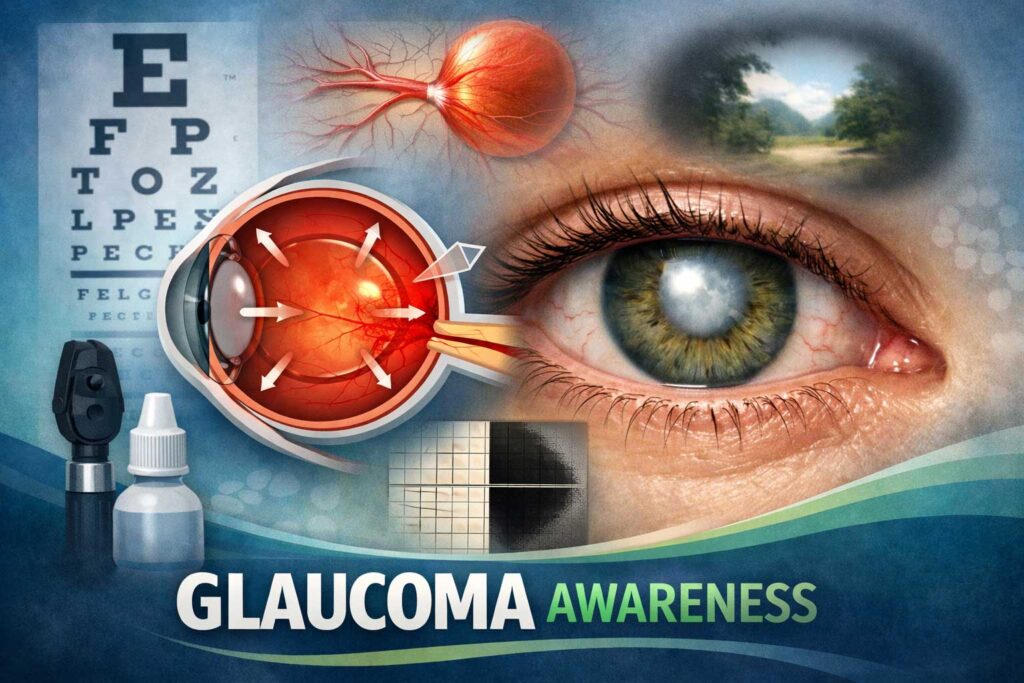
Glaucoma is one of the top causes of irreversible blindness.
But many people don’t know they have it.
That’s why Glaucoma Awareness Week matters.
It focuses on what puts you at risk—and what you can do now.
What Makes Glaucoma Dangerous?
Glaucoma damages the optic nerve.
This nerve sends images from your eyes to your brain.
Once it’s damaged, vision loss can’t be reversed.
The tricky part?
You may not notice symptoms until it’s too late.
Who’s at Risk?
You might be more likely to get glaucoma if:
You’re over 40
A parent or sibling has glaucoma
You have diabetes or high blood pressure
You’ve had an eye injury
You use steroid medications often
You’re nearsighted or farsighted
You’re of African or Asian descent
Are you in one of these groups?
If yes, regular eye checks are even more important.
What Happens Without Screening?
Let’s say you skip your annual eye exam.
You feel fine.
But your eye pressure is climbing.
Over time, that pressure damages the nerve.
Your side vision starts to fade.
You don’t notice until it’s bad.
By then, it’s permanent.
That’s why screening matters—even when you feel okay.
What You Can Do
You can lower your risk.
Here’s how:
Get a full eye exam every 1 to 2 years
Know your family history
Tell your doctor if you have diabetes or high blood pressure
Take medications only as prescribed
Wear eye protection during risky tasks
Simple steps like these can help spot glaucoma early.
That’s when it’s easier to manage.
What Doctors Check During Screening
A full eye exam looks at more than just vision.
It may include:
Measuring eye pressure
Inspecting the optic nerve
Testing your side vision
Imaging the eye’s internal structure
All this helps your doctor spot early signs—before vision loss starts.
Are There Symptoms?
Most early-stage glaucoma has no symptoms.
That’s why it’s often called “silent.”
But as it gets worse, you may notice:
Blurry or narrowed side vision
Eye pain
Halos around lights
Headaches or nausea (in acute cases)
Don’t wait for symptoms.
Go get checked.
How Is Glaucoma Treated?
Treatments aim to lower eye pressure.
This helps prevent nerve damage.
Options include:
Prescription eye drops
Pills
Laser treatments
Surgery
The right plan depends on your specific case.
Early detection makes treatment more effective.
Why Awareness Week Matters
Events like Glaucoma Awareness Week aim to:
Teach people the risks
Encourage eye exams
Share real stories
Push for access to eye care
If even one person avoids blindness through early detection, the effort is worth it.
What You Should Ask Your Eye Doctor
Not sure where to start?
Ask:
Am I at risk for glaucoma?
When was my last eye pressure check?
Should I schedule a full screening?
What else can I do to protect my vision?
These questions start the right conversation.
How to Share What You Know
Talk to your family.
Ask if glaucoma runs in your bloodline.
Encourage older relatives to get tested.
Share this article.
One simple act could save someone’s sight.
Final Thought
Glaucoma steals vision without warning.
But with regular exams and awareness, you can fight back.
You have the tools.
You have the facts.
Take care of your eyes—starting today.