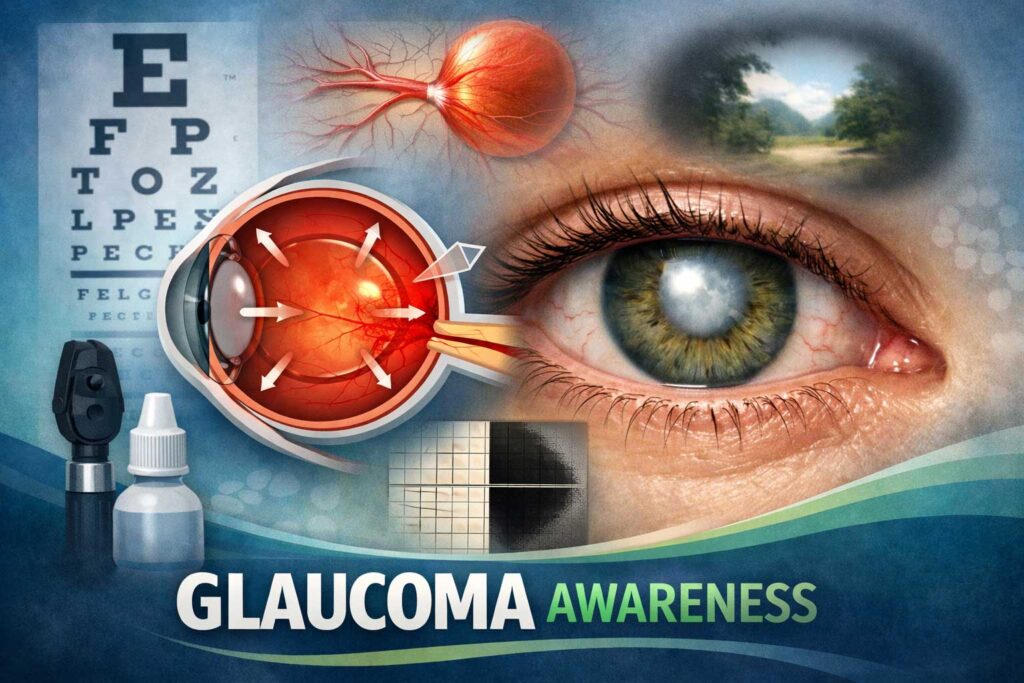
Glaucoma Surgery: What You Should Know
Glaucoma raises pressure inside your eye.
That pressure can damage the optic nerve.
If drops and other treatments no longer work,
surgery may be the next step.
Is it the right move for you?
What should you expect?
This guide walks you through it.
Why Consider Surgery?
Medication helps most people manage pressure.
But in some cases, it’s not enough.
You may need surgery if:
Your pressure stays high despite treatment
You have vision loss that’s getting worse
You can’t tolerate drops or pills
You miss doses often
Your drainage system is damaged
Surgery aims to lower pressure long term—
and slow or stop nerve damage.
Types of Glaucoma Surgery
There’s more than one option.
Each type targets pressure in a different way.
1. Trabeculectomy
Creates a new drainage path for eye fluid.
Common for advanced glaucoma.
Done in a hospital or surgical center
Local anesthesia
Recovery time: several weeks
2. Drainage Implants (Tubes or Shunts)
Small device placed in the eye to help drain fluid.
Good for people who’ve had other surgeries
Often used in children or complex cases
Stays in the eye permanently
3. MIGS (Minimally Invasive Glaucoma Surgery)
Newer techniques with fewer risks.
Examples include:
iStent
Hydrus
Trabectome
GATT (Gonioscopy-Assisted Transluminal Trabeculotomy)
MIGS is often combined with cataract surgery.
What to Expect Before Surgery
Your doctor will check eye pressure, optic nerve damage, and vision loss
You’ll stop some medications before surgery
You may need a physical exam or lab tests
Ask:
Which procedure are you recommending?
What are the risks and benefits?
How long is recovery?
Bring a list of your current medications and health history.
The Day of Surgery
Most glaucoma surgeries are outpatient
You’ll be awake, but your eye will be numb
The surgery takes 30–90 minutes depending on the type
You’ll wear an eye shield or patch after
Arrange for someone to drive you home.
Recovery and Aftercare
Your eye needs time to heal.
Here’s what recovery usually looks like:
Use eye drops to prevent infection and control inflammation
Avoid rubbing your eye
Wear your eye shield while sleeping
Limit bending, lifting, or straining
Return for regular pressure checks
Healing may take weeks.
Follow every instruction carefully.
Will Surgery Cure Glaucoma?
No.
Surgery lowers pressure but doesn’t reverse nerve damage.
You may still need medication afterward—just fewer or lower doses.
The goal is to stop further loss, not restore what’s already gone.
What Are the Risks?
Every surgery has risks. Ask your doctor about:
Infection
Bleeding
Vision changes
Pressure dropping too low
Scarring that blocks fluid flow
Need for repeat surgery
These risks vary depending on your health, age, and type of surgery.
Questions to Ask Your Surgeon
What is the success rate for this procedure?
How long will the pressure stay low?
Can I go back to work right away?
What happens if this surgery doesn’t work?
Write down your questions in advance.
Tracking Your Progress After Surgery
Watch for:
Eye pain
Vision loss
Light sensitivity
Redness that doesn’t fade
Fluid or discharge
Call your doctor right away if any of these appear.
Keep all follow-up appointments.
Your pressure may shift during healing.
Who Needs Surgery Most?
People who may benefit from surgery include:
Those with advanced glaucoma
People who can’t keep up with drops
Those with pressure above target despite full treatment
Patients needing cataract surgery who also have glaucoma
Surgery is often a step taken when vision loss begins to accelerate.
Takeaways
Surgery isn’t the first treatment.
But it may help when others no longer work.
You may feel nervous about it. That’s normal.
Ask questions.
Understand your options.
And decide with your care team.
For many, surgery helps protect the vision they still have.