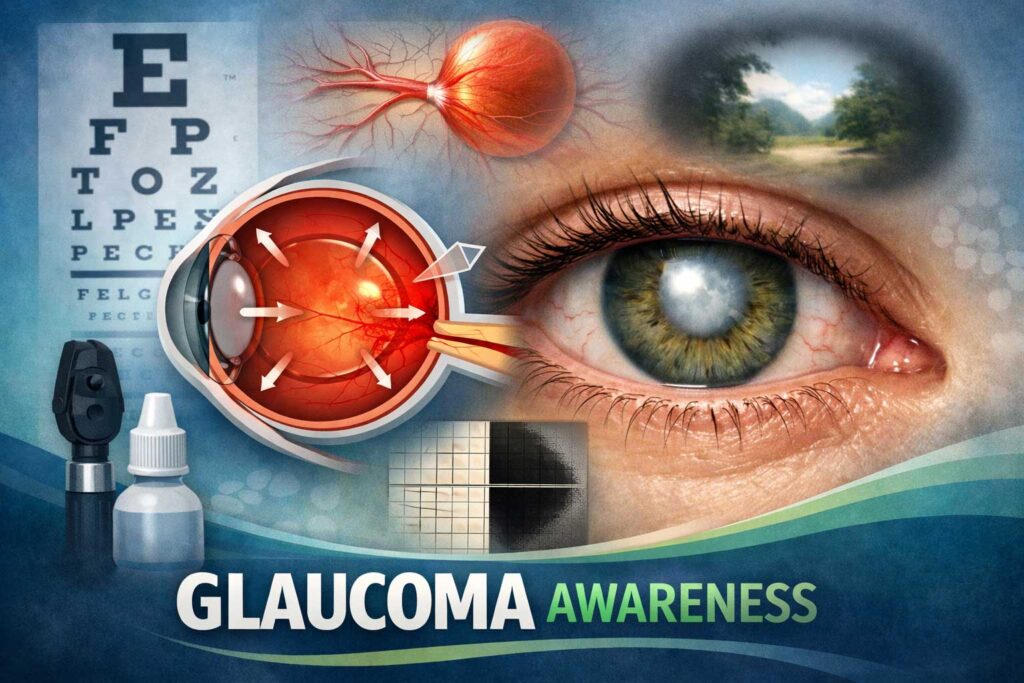
What Happens If You Ignore Glaucoma?
Glaucoma often goes unnoticed.
You may not feel pain.
You may not notice vision loss until it’s too late.
But what happens if you do nothing?
What Is Glaucoma?
Glaucoma is a group of conditions that damage the optic nerve.
It usually happens when fluid builds up in the eye.
This raises pressure inside your eye (intraocular pressure or IOP).
The pressure damages the nerve that sends images to your brain.
Left untreated, it can cause blindness.
Why Early Stages Feel Safe
You might think you’re fine.
You see clearly.
You don’t feel pain.
That’s why glaucoma is called the “silent thief of sight.”
You can lose vision slowly—without noticing.
By the time you do, the damage is often permanent.
What Happens If You Do Nothing?
Pressure keeps rising.
Your eye keeps producing fluid, but it can’t drain properly.The optic nerve gets damaged.
Nerve fibers die over time, reducing your field of vision.You lose peripheral vision.
You may not see objects from the sides.Vision becomes tunnel-like.
Eventually, only your central vision remains.Complete blindness can follow.
Once nerve damage is severe, you can lose sight entirely.
There’s no way to restore vision that’s already lost.
Personal Stories Tell the Truth
Many people say the same thing:
“I didn’t even know anything was wrong until I bumped into a wall.”
Or:
“I thought I just needed new glasses.”
Regular checkups could have made the difference.
What Makes Glaucoma Risk Higher?
Age (over 60)
Family history
Diabetes
High blood pressure
African or Asian ancestry
Thin corneas
Eye injuries
Do any of these apply to you?
If yes, you’re at higher risk.
You can’t feel pressure building up in your eye.
Only an eye exam can detect it early.
Can You Treat Glaucoma?
Yes.
You can’t cure it, but you can slow it down.
Sometimes, you can stop it from getting worse.
Treatment options include:
Eye drops
These lower pressure by reducing fluid or helping it drain.Oral medication
Sometimes used with drops to control pressure better.Laser treatment
Opens drainage channels in the eye.Surgery
For advanced cases or when other treatments fail.
The earlier you start, the better the outcome.
How to Know If You Have It
You won’t know without an eye exam.
A basic vision test isn’t enough.
You need:
Eye pressure check
Optic nerve scan
Visual field test
Eye drainage exam
If you’ve never had these, you don’t know your risk.
What Should You Do Today?
Schedule a full eye exam—especially if you’re over 40.
Ask your eye doctor about your risk level.
Share your family history.
Follow treatment plans if diagnosed.
Don’t skip follow-up visits.
What If You Already Lost Some Vision?
Act now to save the rest.
Treatment won’t bring lost vision back,
but it can protect what remains.
That matters.
Even saving a small part of your sight can help you stay independent.
Ask Yourself
Have I ever had my eye pressure checked?
When was my last full eye exam?
Do I know my family’s eye health history?
If the answer is “no” to any of these, start today.
Final Thought
Doing nothing means losing vision—slowly and silently.
Glaucoma isn’t painful.
It’s not dramatic.
It just steals your sight one piece at a time.
But you have the power to stop it—if you act early.