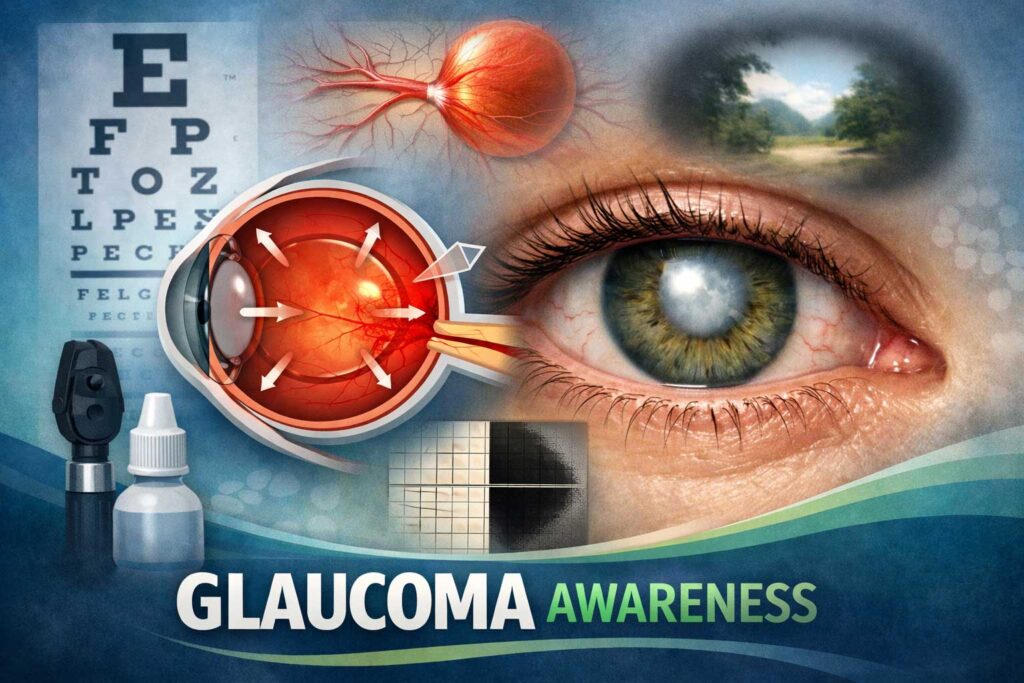
Minimally Invasive Glaucoma Treatments Show Promising Research Advances
Glaucoma, often referred to as the “silent thief of sight,” is a leading cause of irreversible blindness worldwide. Traditional treatments like eye drops, laser therapy, and invasive surgeries have been the mainstay for managing intraocular pressure (IOP). However, recent advancements in minimally invasive glaucoma surgeries (MIGS) are revolutionizing treatment options, offering safer, faster, and more effective solutions for patients.
In this article, we’ll explore the latest research breakthroughs in MIGS, their benefits, and how they are transforming glaucoma care.
What Are Minimally Invasive Glaucoma Treatments (MIGS)?
MIGS refers to a group of surgical procedures designed to lower IOP with minimal trauma to the eye. Unlike traditional glaucoma surgeries, which can be highly invasive and require lengthy recovery periods, MIGS procedures are:
- Performed through tiny incisions
- Associated with fewer complications
- Often combined with cataract surgery
- Suitable for mild to moderate glaucoma cases
These treatments aim to improve fluid drainage from the eye or reduce fluid production, helping to stabilize IOP with minimal disruption to the eye’s anatomy.
Latest Research Advances in MIGS
1. Micro-Stent Implants
One of the most exciting developments in MIGS is the use of micro-stent implants. Devices like the iStent and Hydrus Microstent are designed to enhance the eye’s natural drainage system. Recent studies show:
- iStent can reduce IOP by up to 20% when combined with cataract surgery
- Hydrus Microstent demonstrates long-term efficacy in maintaining IOP control
These stents are biocompatible and often require no sutures, making recovery quicker and more comfortable for patients.
2. Ab Interno Canaloplasty
This procedure involves using a microcatheter to dilate and clear the eye’s drainage canal (Schlemm’s canal). Research indicates that:
- It significantly lowers IOP without damaging surrounding tissues
- It has a high safety profile with minimal postoperative complications
Ab interno canaloplasty is particularly beneficial for patients who don’t respond well to medications.
3. Laser-Based MIGS Techniques
Laser treatments like endocyclophotocoagulation (ECP) and selective laser trabeculoplasty (SLT) are gaining traction. Studies highlight:
- ECP reduces fluid production by targeting the ciliary body
- SLT improves drainage by stimulating the trabecular meshwork
Both procedures are quick, outpatient treatments with minimal downtime.
4. Suprachoroidal Shunts
New devices, such as the CyPass Micro-Stent (though withdrawn and later reintroduced with modifications), target the suprachoroidal space to enhance fluid outflow. Research suggests:
- They provide an alternative drainage pathway
- They are effective in reducing IOP in refractory glaucoma cases
Benefits of MIGS Over Traditional Glaucoma Surgeries
MIGS offers several advantages compared to conventional treatments like trabeculectomy or tube shunts:
- Less Invasive: Smaller incisions mean reduced risk of complications
- Faster Recovery: Patients often resume normal activities within days
- Lower Complication Rates: Fewer instances of hypotony, infections, or scarring
- Combination with Cataract Surgery: Many MIGS procedures can be performed alongside cataract removal
Who Is a Candidate for MIGS?
While MIGS is a game-changer, not all glaucoma patients are ideal candidates. The best candidates typically include those with:
- Mild to moderate glaucoma
- Open-angle glaucoma (the most common type)
- Patients seeking an alternative to daily eye drops
However, those with advanced glaucoma or angle-closure glaucoma may still require traditional surgeries.
Future Directions in MIGS Research
The field of MIGS is rapidly evolving, with ongoing studies exploring:
- Biodegradable Implants: Stents that dissolve after improving drainage
- Gene Therapy: Targeting genetic factors contributing to glaucoma
- Smart Implants: Devices that adjust fluid drainage based on real-time IOP readings
Conclusion
Minimally invasive glaucoma treatments represent a significant leap forward in eye care, offering safer and more efficient ways to manage IOP. With continuous research and technological advancements, MIGS is poised to become the standard of care for many glaucoma patients.
If you or a loved one is struggling with glaucoma, consult an ophthalmologist to explore whether MIGS could be the right treatment option. Early intervention can preserve vision and improve quality of life.
Stay informed about the latest in glaucoma research—your eyesight depends on it!