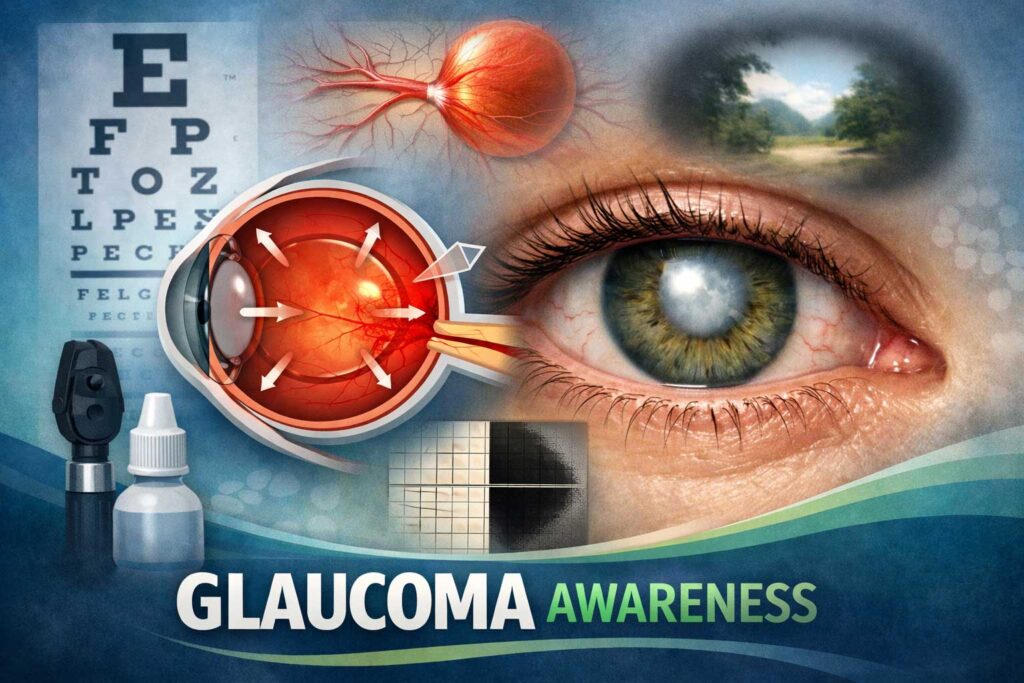
Natural Ways to Lower Eye Pressure in Glaucoma
Glaucoma is linked to high intraocular pressure (IOP).
If left unchecked, it can lead to vision loss.
You may ask: can lifestyle and diet help manage it?
The short answer—yes.
While medical treatment is essential, your daily habits can support better results.
Let’s break it down.
What Is Eye Pressure?
Inside your eye, fluid builds and drains.
When drainage slows, pressure rises.
This harms the optic nerve.
Doctors monitor IOP using tonometers.
Normal IOP is 10 to 21 mm Hg.
Glaucoma often pushes that number higher.
Lowering it helps preserve your vision.
1. Stay Hydrated—But Not Too Fast
Water helps your body function.
But drinking too much too quickly can spike IOP.
What to do:
Drink water in small amounts throughout the day
Avoid chugging large amounts in one sitting
Example:
Instead of 1 liter in 5 minutes, aim for 250 ml every 2 hours.
2. Eat Leafy Greens Daily
Spinach, kale, and lettuce contain nitrates.
These help improve blood flow—including in the eyes.
Tips:
Add greens to smoothies
Steam or stir-fry as a side
Replace white rice with leafy green salads
A study found people who ate more greens had a lower risk of glaucoma.
3. Limit Caffeine
Caffeine can raise IOP temporarily.
If you drink several cups of coffee, it may add up.
Suggestions:
Cut back to 1 cup per day
Try herbal teas or decaf options
Monitor how your eyes feel after caffeine
Track your intake to spot any patterns.
4. Exercise Without Strain
Regular movement can reduce pressure.
Best options:
Brisk walking
Light cycling
Swimming
Avoid:
Heavy lifting
Head-down yoga poses
Inverted exercises
Keep your head above your heart when working out.
5. Sleep With Head Elevated
Eye pressure rises when lying flat.
Try this:
Use a wedge pillow or elevate the head of your bed
Aim for a 20–30° angle
Avoid sleeping face-down
It may improve nighttime IOP levels.
6. Manage Stress and Breathing
Stress affects your whole body—including your eyes.
Practice:
Deep breathing (4 seconds in, 4 out)
Short meditation sessions
Quiet outdoor walks
Some people notice reduced eye strain when they manage stress better.
7. Quit Smoking
Smoking limits blood flow and increases inflammation.
Quitting:
Improves circulation
Lowers overall pressure risks
Helps medications work better
If quitting is hard, speak to a doctor for support plans.
8. Balance Your Blood Sugar
Diabetes and high blood sugar impact eye health.
Ways to improve:
Eat whole foods (oats, brown rice, legumes)
Avoid high-sugar drinks
Exercise regularly
Balanced sugar = healthier nerves, including in the eye.
9. Take Omega-3 Fats
Found in:
Fatty fish (sardines, salmon)
Flaxseed
Walnuts
Omega-3 supports blood flow and nerve health.
Check with your doctor before adding supplements.
10. Follow Up With Your Eye Doctor
Natural steps help—but do not replace medical care.
Use prescribed eye drops as directed
Track your IOP at each visit
Ask about combining medical and lifestyle options
If you feel side effects from medication, report them immediately.
Questions You Might Ask
Can I skip eye drops if I follow these tips?
No. Lifestyle changes help, but do not replace prescribed treatment.
Do supplements help?
Some may—like omega-3 or ginkgo—but consult your doctor first.
Is glaucoma always caused by pressure?
Not always. Some people have “normal tension” glaucoma, where damage happens even with normal IOP.
Keep It Simple
Start with one change.
Then add another each week.
Examples:
Week 1: Cut caffeine to 1 cup
Week 2: Add spinach to lunch
Week 3: Go on 20-minute walks
Week 4: Elevate your head while sleeping
Small steps lead to progress.
Your Role in Eye Health
You have more control than you think.
Stay consistent.
Ask questions.
Track changes.
By combining natural methods with proper treatment, you help protect your vision for the long run.