Understanding Astigmatism: A Common Eye Condition Affecting Millions
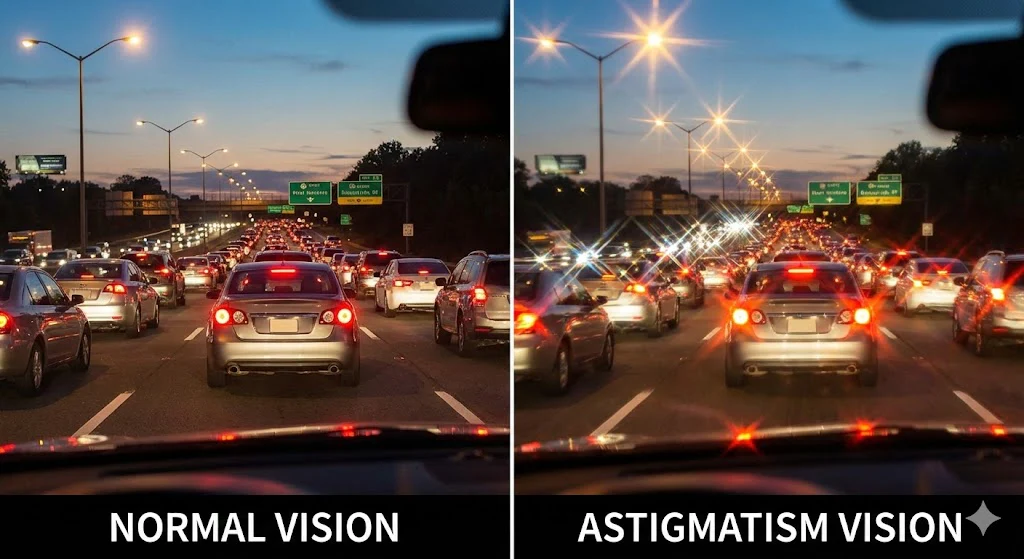
Have you ever experienced blurred or distorted vision at all distances, even with your glasses on? Do lights at night appear with annoying streaks or halos? If so, you might be one of the millions of people worldwide living with astigmatism. Far from being a disease or an eye health emergency, astigmatism is a common and very treatable refractive error, much like nearsightedness or farsightedness. Yet, misconceptions about it abound. This guide will demystify astigmatism, explaining its causes, symptoms, and the effective solutions available to bring your world into clear focus.
What Is Astigmatism, Really?
To understand astigmatism, it helps to first visualize the structure of a perfectly shaped eye. In an ideal scenario, the cornea (the clear front surface of your eye) and the lens (inside the eye) are smoothly curved in all directions, like a perfectly round basketball. This uniform shape allows light rays to bend (refract) evenly and focus sharply onto a single point on the retina at the back of your eye, resulting in clear vision.
Astigmatism occurs when the cornea or lens has an irregular curvature. Instead of being perfectly spherical, the eye is shaped more like a rugby ball or the back of a spoon. This uneven curvature means light rays focus on multiple points in the eye, either in front of or behind the retina, causing blurred or distorted vision. It’s not about the health of your eye, but rather its shape.
The Different Types of Astigmatism
Astigmatism isn’t a one-size-fits-all condition. It’s typically categorized in a few ways:
- Corneal vs. Lenticular Astigmatism: The most common form is corneal astigmatism, where the irregular shape is in the cornea. Lenticular astigmatism, which is less common, involves an irregularly shaped lens inside the eye.
- Regular vs. Irregular Astigmatism: In regular astigmatism, the curvature is uneven but symmetrical, meaning the steepest and flattest curves are 90 degrees apart. This is the most common type and is easily corrected with standard glasses or contacts. Irregular astigmatism, where the curvature is not symmetrical, is often caused by an eye injury, disease (like keratoconus), or scarring and requires specialized treatment.
- Myopic, Hyperopic, and Mixed Astigmatism: Astigmatism often coexists with other refractive errors. It’s called myopic astigmatism if one or both principal meridians are nearsighted; hyperopic astigmatism if one or both are farsighted; and mixed if one meridian is nearsighted and the other is farsighted.
Recognizing the Symptoms: Is It Astigmatism?
Astigmatism symptoms can range from mild to severe and are often present from birth. Many people have a small degree of astigmatism without even realizing it. However, when it becomes significant enough to affect vision, you may notice:
- Blurred or distorted vision at all distances (near, intermediate, and far).
- Eye strain or discomfort, especially after prolonged periods of reading or screen use.
- Headaches, often stemming from squinting to try and see clearly.
- Difficulty with night vision and increased sensitivity to glare, with lights appearing streaky, haloed, or fuzzy.
- Squinting to try and improve focus.
If you’re experiencing these symptoms, the only way to get a definitive diagnosis is through a comprehensive eye exam with an optometrist or ophthalmologist. They will use a series of tests, including a phoropter (the “which is better, one or two?” device) and a keratometer or corneal topographer to precisely map the curvature of your cornea.
Correcting Your Vision: Glasses, Contacts, and Beyond
The great news is that astigmatism is highly correctable. The goal of all treatments is to compensate for the uneven curvature of your cornea or lens, redirecting light to focus properly on the retina.
1. Eyeglasses
For most people, eyeglasses are the simplest and safest way to correct astigmatism. The lenses required are called “toric” lenses. Unlike standard spherical lenses, toric lenses have different optical powers and orientations built into them to correct the specific uneven curvature in your eye. Your prescription will include a “cylinder” (CYL) and “axis” (AXIS) value to define this correction.
2. Contact Lenses
Many people with astigmatism successfully wear contact lenses. Options include:
- Toric Soft Contact Lenses: These are specially designed with different powers in different meridians of the lens and a mechanism (like weighting or thin zones) to keep them from rotating on your eye, ensuring the correction aligns perfectly.
- Rigid Gas Permeable (RGP) Lenses: These hard contacts create a smooth, uniform surface over the cornea, effectively replacing the irregular corneal shape with a perfectly refracting surface. They can provide exceptionally sharp vision for irregular astigmatism.
3. Refractive Surgery
For those looking for a permanent solution, several surgical options can reshape the cornea:
- LASIK & PRK: These laser eye surgeries use a laser to precisely reshape the cornea, correcting its curvature. They are highly effective for regular astigmatism.
- SMILE: A newer, minimally invasive laser procedure that can also correct astigmatism.
- Other Procedures: For those not suitable for laser surgery, options like astigmatic keratotomy (AK) or lens-based surgery (like implanting a toric intraocular lens during cataract surgery) are available.
A thorough consultation with a qualified eye surgeon is essential to determine if you are a good candidate for any refractive procedure.
Dispelling Common Myths About Astigmatism
Let’s clear up some persistent misunderstandings:
- Myth: Astigmatism gets worse from reading in low light or sitting too close to the TV. Fact: These activities may cause eye strain, but they do not cause or worsen the physical shape of your eye.
- Myth: Only adults have astigmatism. Fact: Children can have it too, and uncorrected astigmatism can lead to amblyopia (lazy eye). Regular pediatric eye exams are crucial.
- Myth: You can’t wear contact lenses if you have astigmatism. Fact: As discussed, modern toric and RGP lenses make contact lens wear a comfortable and effective option for most.
Living Clearly with Astigmatism
Astigmatism is a very common part of the human visual landscape, not a barrier to clear sight. The key to managing it is proactive eye care. Scheduling regular comprehensive eye exams allows for early detection and accurate prescription updates, ensuring you always have the sharpest, most comfortable vision possible. Whether you choose the classic style of glasses, the convenience of contacts, or the freedom of surgery, modern optometry offers a clear path forward. Don’t accept blur as normal—understanding your condition is the first step to seeing your world in perfect detail.