Spinach Eye Drops Show Promise for Treating Macular Degeneration
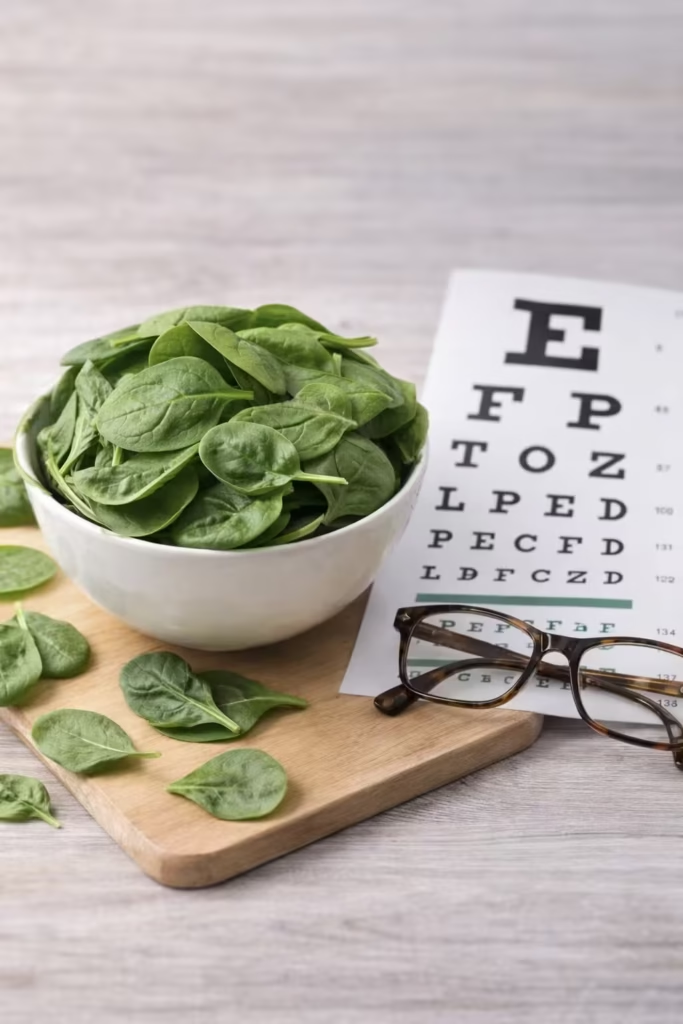
For decades, the phrase “eat your spinach” has been a dietary mantra, often repeated by parents hoping their children would absorb the green vegetable’s legendary nutritional benefits. Popeye might have been onto something more than just muscle strength. A groundbreaking new study has transformed the humble spinach leaf from a salad staple into a potential therapeutic powerhouse—specifically, into an eye drop that could revolutionize the treatment of age-related macular degeneration (AMD).
Macular degeneration remains one of the leading causes of vision loss globally, affecting millions of people over the age of 50. Current treatments often involve invasive injections directly into the eye, a procedure many patients find painful, anxiety-inducing, and difficult to repeat regularly. The emergence of a non-invasive, plant-derived alternative could represent a major shift in ophthalmic care.
The Science Behind the Spinach-Based Solution
Researchers at a leading biomedical institute have successfully extracted and stabilized a key compound found in spinach—lutein—and turned it into a new formulation suitable for eye drops. Lutein is a carotenoid pigment naturally concentrated in the macula, the central part of the retina responsible for sharp, detailed vision. It works as a powerful antioxidant and blue-light filter, helping protect delicate photoreceptor cells from oxidative stress and light-induced damage.
Why Lutein Matters for Your Eyes
The health of the macula is closely tied to its lutein levels. As we age, these levels naturally decline, leaving the retina more vulnerable.
- Antioxidant protection: Lutein helps neutralize free radicals caused by UV light and pollution.
- Blue light filtration: It absorbs high-energy blue light and reduces photochemical damage to the retina.
- Structural support: It helps maintain the stability of cell membranes in the macula.
The challenge has always been bioavailability. Oral lutein supplements must pass through digestion, and only a small amount reaches the eye. This spinach-derived eye drop bypasses the digestive system entirely, delivering the compound directly where it is needed.
A Non-Invasive Alternative to Intraocular Injections
The current standard treatment for wet AMD involves anti-VEGF injections directly into the eye. While effective, this method is far from ideal.
The Problem with Current Treatments
- Invasiveness: Injections into the eye are stressful and uncomfortable for patients.
- Frequency: Some patients require monthly or bi-monthly treatments.
- Infection risk: There is a small but serious risk of complications such as infection or retinal damage.
- Cost and access: Biologic treatments are expensive and not always widely available.
The spinach-based eye drop introduces a very different approach. By applying drops to the eye’s surface, patients may eventually achieve therapeutic levels of lutein in the retina without injections. This could make long-term management more accessible and less burdensome.
How the Drops Work Mechanistically
The key breakthrough is the delivery system. The eye has strong protective barriers that make drug delivery difficult. Researchers used a nano-liposomal system that packages lutein extracted from spinach into microscopic lipid carriers. These particles are small enough to pass through the cornea and reach the back of the eye, where the lutein is released and absorbed into retinal tissue, helping restore macular pigment density.
Clinical Evidence and Early Trial Results
The excitement around this development is based on early-stage research and initial human trials.
What the Data Shows
- Increased macular pigment density: After 12 weeks, participants showed an average 18% increase in MPOD compared to placebo.
- Improved contrast sensitivity: Patients reported better clarity in low-light conditions.
- Reduced glare sensitivity: Many experienced less discomfort in bright environments.
- Safety profile: No serious side effects were reported. Mild stinging was the most common short-term effect.
These results are still preliminary. Larger Phase III trials are needed to confirm both safety and effectiveness. However, early findings are encouraging.
Comparing the Drops to Oral Supplements
Many patients already take lutein supplements as part of the AREDS2 formula. Here’s how the two approaches compare:
| Feature | Oral Lutein Supplements | Spinach-Based Eye Drops |
|---|---|---|
| Delivery route | Systemic (digestive system) | Direct to eye (topical) |
| Bioavailability | Low (<1% reaches the eye) | High, targeted delivery |
| Onset of effects | Weeks to months | Days to weeks |
| Compliance | Moderate (daily pills) | High (simple drops) |
| Side effects | Mild GI discomfort, rare skin yellowing | Mild temporary stinging |
For patients who struggle with supplements or absorption issues, eye drops may offer a more direct and practical alternative. They may also help restore macular pigment levels faster than oral supplementation.
Broader Implications for Eye Health
While the focus is age-related macular degeneration, the potential uses could extend further:
- Diabetic retinopathy: May help reduce oxidative stress in the retina
- Retinitis pigmentosa: Could support retinal cell protection
- Cataract prevention: Lutein is present in the lens and may help delay clouding
- Digital eye strain: May offer protection against prolonged screen exposure
That said, caution is important. Wet AMD is driven by abnormal blood vessel growth linked to VEGF. Lutein does not directly block VEGF, meaning these drops are unlikely to replace current injection therapies. Instead, they are more likely to serve as a preventive or maintenance option, especially for dry AMD.
What This Means for Patients Right Now
This development is promising, but it should be viewed realistically.
Practical Takeaways
- Do not stop prescribed treatments such as anti-VEGF injections.
- Maintain a healthy diet rich in leafy greens and antioxidants.
- Follow updates on ongoing Phase III clinical trials.
- Always consult an eye specialist before making treatment decisions.
The spinach-based eye drop is not a cure, but it represents a meaningful step forward in how we think about treating degenerative eye disease. It shifts the focus from invasive procedures to gentler, preventive care. The journey from lab research to clinical use is still ongoing, but for the first time in a long time, a simple leafy vegetable may be opening a new path in eye health.