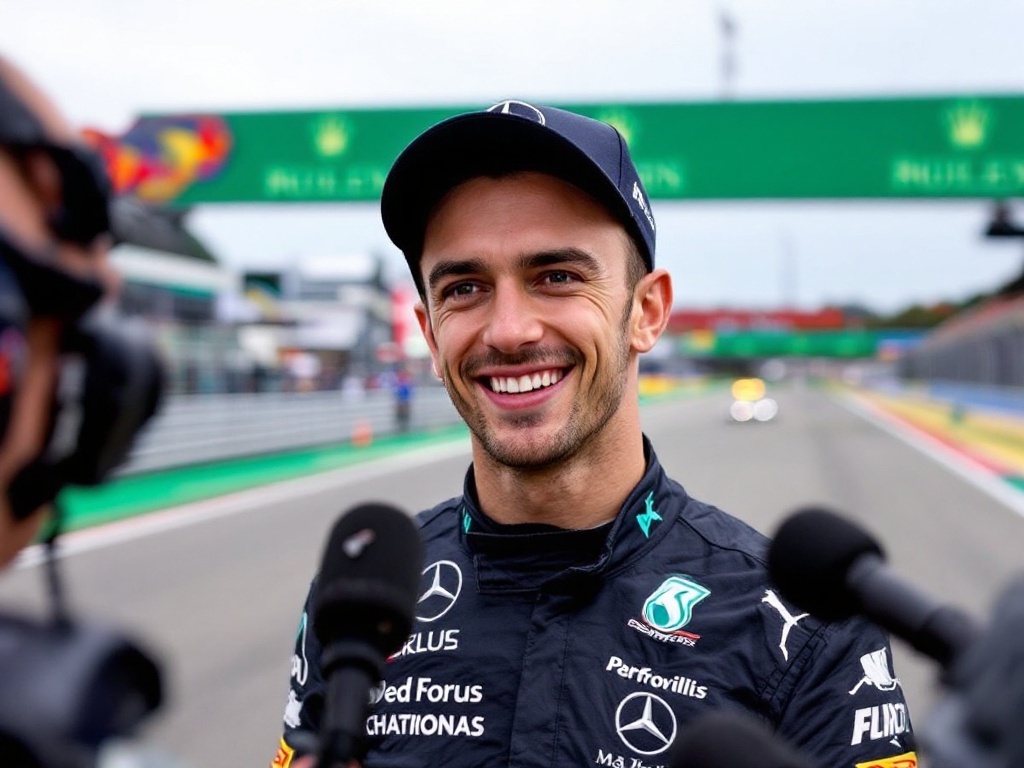
George Russell Mercedes Engine Problem Resolution
Mercedes resolves engine issue after Hungarian Grand Prix setback
Mercedes engine problem
When Technology Fails at the Worst Moment
Imagine preparing for the most important moment of your professional life, only to have your equipment betray you at the final stretch. That’s exactly what happened to George Russell during a critical racing weekend, when an unexpected engine problem threatened to derail his championship aspirations. The British driver found himself facing a technical challenge that could have defined his entire season, yet his response afterward revealed a champion’s mindset focused on moving forward.
Engine reliability has always been a cornerstone of Formula One racing. When teams invest millions in development, every component must perform flawlessly under extreme conditions. The Mercedes engineering team, known for their precision and attention to detail, suddenly found themselves investigating a problem that had slipped through their rigorous testing protocols.
Understanding the Technical Challenge
The Hungarian Grand Prix presented unique circumstances for all competitors. High ambient temperatures, demanding braking zones, and a tight, narrow circuit create an unforgiving environment for power units. Mercedes faced an unexpected engine complication that affected their driver’s performance during qualifying and race preparation phases.
What made this situation particularly frustrating was the timing. Russell had been performing exceptionally well throughout the season, and the team expected to challenge for important points at this venue. Instead, the mechanical issue forced the engineers back to their drawing boards, analyzing telemetry data and system readouts to pinpoint the exact source of the malfunction.
The complexity of modern Formula One engines cannot be overstated. Each power unit contains thousands of precisely engineered components working in harmony. When even one small element fails to perform correctly, it can cascade into broader performance issues that impact the entire vehicle’s operation.
The Investigation and Resolution
Mercedes didn’t panic. Instead, the team followed their established protocol for diagnosing technical problems. Engineers examined every sensor reading, reviewed high-speed footage from onboard cameras, and cross-referenced data from multiple sources to identify the culprit. This methodical approach, though time-consuming, ensures that solutions address the root cause rather than merely treating symptoms.
The identification process revealed a specific issue within the engine’s systems. Rather than attempting a quick fix that might prove unreliable, the Mercedes technical staff opted for a comprehensive solution. This decision reflected their commitment to quality and their understanding that a hastily repaired engine could fail again during a crucial moment.
Communication between Russell and his engineering team became essential during this period. The driver provided crucial feedback about how the engine behaved under various conditions, information that helped technicians narrow down their investigation. This collaboration between human intuition and technical analysis exemplifies how modern Formula One operates at its highest level.
Russell’s Perspective and Mindset
After the technical work was completed, Russell demonstrated the mental resilience required at the elite level of motorsport. Rather than dwelling on what might have been, he shifted his focus entirely toward the future. His comments reflected gratitude for the team’s swift action and confidence in their ability to prevent similar issues moving forward.
This forward-thinking approach separates champions from ordinary competitors. Russell understood that frustration about past events, while natural, would only distract from preparation for upcoming challenges. Instead, he channeled any disappointment into determination to make the most of future opportunities.
The driver’s optimistic outlook also sends a powerful message to his team. When leadership responds positively to setbacks, it lifts morale and reinforces the collaborative spirit necessary for success. Russell’s attitude essentially told his engineers that he trusted their work and believed in their ability to solve problems when they arose.
The Broader Context of Formula One Engineering
Engine problems in Formula One are not new, but they remain rare at the highest levels of the sport. Teams employ hundreds of specialists dedicated to ensuring reliability. They test components under simulated conditions far more extreme than anything encountered during actual racing. Yet despite these precautions, unexpected issues occasionally emerge.
What distinguishes top-tier organizations like Mercedes is their response capability. When problems do occur, these teams have the resources, expertise, and experience to diagnose and resolve them efficiently. This reliability in handling adversity has become a competitive advantage in itself.
The sport’s regulatory framework also influences how teams approach reliability. Restrictions on how many power units drivers can use throughout a season incentivize manufacturers to ensure each unit performs for extended periods. Penalties for using additional engines beyond the allocation create financial and strategic consequences that push teams toward perfection.
Learning from Technical Setbacks
Every technical problem that occurs in Formula One becomes a learning opportunity. Mercedes engineers would document every detail of this issue and its resolution, adding this knowledge to their institutional memory. This information helps inform future design decisions and testing protocols.
Russell’s experience, though frustrating in the moment, contributed valuable data to the team’s development process. His observations about engine behavior under specific conditions would influence how Mercedes approached future power unit refinements. In this way, setbacks actually accelerate progress.
The team would also examine whether the issue could have been detected earlier in the season through different testing procedures. Preventive measures might be implemented to catch similar problems before they occur at race weekends. This continuous improvement cycle is how Formula One teams maintain their competitive edge.
Moving Forward with Confidence
Russell’s statement about keeping his eyes forward now captures the essence of professional motorsport. Races come and go, seasons unfold with their triumphs and disappointments, but the focus must remain constant: preparation, execution, and relentless pursuit of improvement. His optimism wasn’t naive; it was grounded in confidence in his team’s abilities.
The quick resolution of the engine problem validated this confidence. Mercedes proved once again why they belong among Formula One’s elite organizations. Their technical depth, problem-solving capability, and ability to implement solutions under pressure represent the qualities that drive success at this level.
For Russell, this experience reinforced his belief in the team surrounding him. In Formula One, a driver’s relationship with their team is paramount. Trust, built through consistent communication and demonstrated competence, becomes the foundation for working together through challenges. Russell clearly possesses that trust in Mercedes.
The Road Ahead
With the engine problem behind them, Russell and Mercedes could focus entirely on maximizing performance at subsequent races. The experience hadn’t rattled the driver or shaken his confidence. Instead, it had been handled professionally, resolved thoroughly, and filed away as a learning opportunity.
Formula One demands this kind of resilience from everyone involved. Problems arise unexpectedly, but how teams and drivers respond determines whether setbacks become defining moments or mere footnotes in a successful campaign. Russell’s attitude and his team’s swift action suggested this issue would fall into the latter category.
Looking forward, both Russell and Mercedes would carry this experience as motivation. They’d proven their ability to handle adversity together, an invaluable asset as the season progressed toward its crucial final races.