What Is a Halo Sign? A Key Clue in Eye Exams
Doctors use the term “halo sign” to describe a ring-shaped pattern that shows up during an eye exam or in what a patient reports seeing. This sign carries real diagnostic weight. It points doctors toward specific conditions affecting the eye, glaucoma among them.
What the Halo Sign Actually Means
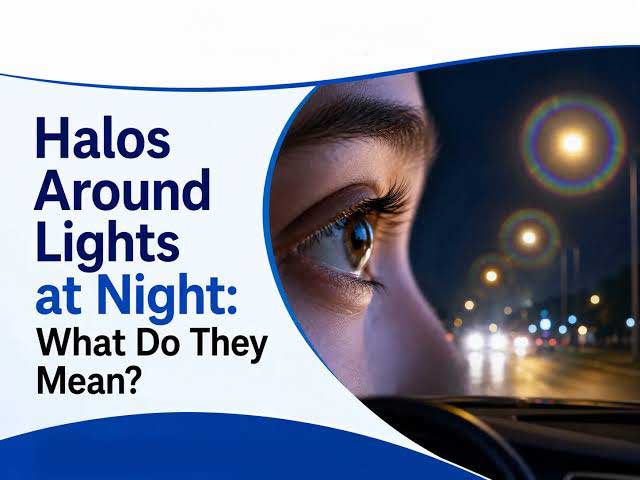
A halo sign refers to a circular pattern of light or color that a patient perceives around light sources, most often at night. Streetlights, headlights, and lamps trigger this effect most clearly, since bright points of light against a dark background make the ring easier to notice.
The sign happens because light scatters as it passes through parts of the eye that have become swollen, cloudy, or irregular. Instead of focusing cleanly onto the retina, some light rays bend and spread, and the brain reads this scattered light as a ring surrounding the source.
Conditions Linked to the Halo Sign
Several eye conditions produce this sign, each through a different mechanism.
Glaucoma, particularly acute angle-closure glaucoma, raises pressure inside the eye rapidly. This pressure swells the cornea, and the swelling scatters light into a halo pattern. Chronic glaucoma can cause the same effect, though usually with less intensity.
Cataracts cloud the eye’s natural lens over time. Light passing through a clouded lens scatters unevenly, producing halos that tend to build gradually rather than appear suddenly.
Corneal edema, or corneal swelling unrelated to glaucoma, produces halos through a similar scattering mechanism. This can follow eye surgery, contact lens overuse, or certain infections.
Fuchs’ dystrophy, a condition affecting the inner layer of the cornea, causes progressive swelling and halos, usually appearing first thing in the morning and easing throughout the day.
Why Doctors Take This Symptom Seriously
A halo sign alone does not confirm a diagnosis. It works as a starting point that narrows down possibilities. When a patient reports halos, an eye doctor moves through a set of standard checks: eye pressure measurement, corneal examination, and a look at the lens for clouding.
The pattern of onset matters here. Halos that appear suddenly, paired with pain and blurred vision, point toward an emergency like angle-closure glaucoma. Halos that build slowly over months point more toward cataracts or a corneal dystrophy.
What to Do If You Notice a Halo Sign
Pay attention to how the halos started and what else came with them.
- Sudden halos with pain, redness, or nausea require same-day medical attention
- Gradual halos without pain still deserve a scheduled eye exam
- Halos that appear only at night, especially while driving, are worth mentioning even if mild
Bring specific details to your appointment. Note when the halos started, whether they affect one eye or both, and whether anything makes them better or worse. This information speeds up diagnosis and helps your doctor rule out or confirm glaucoma early, when treatment works best.
The halo sign is a small detail with outsized diagnostic value. Reporting it clearly, and reporting it early, gives your doctor the clearest path to protecting your vision.
How Doctors Confirm the Underlying Cause
A halo sign narrows the list of possible conditions, but confirming the exact cause takes a few standard tests.
Tonometry measures pressure inside the eye using a quick, painless device. This test rules glaucoma in or out early in the exam.
Slit-lamp examination lets the doctor view the cornea and lens under magnification. Cloudiness in the lens points to cataracts. Swelling limited to the cornea points toward corneal edema or Fuchs’ dystrophy.
Gonioscopy checks the drainage angle of the eye, the structure responsible for regulating fluid outflow. A narrow or closed angle signals risk for angle-closure glaucoma, even before pressure spikes.
Pachymetry measures corneal thickness. A thicker-than-normal cornea can indicate swelling linked to pressure changes or a corneal condition.
Together, these tests move the diagnosis from “a halo sign is present” to a specific, treatable condition. Doctors rarely rely on the symptom alone, since several unrelated conditions can produce the same visual effect.
Halo Sign in One Eye vs. Both Eyes
The pattern of which eye is affected offers another clue. Halos appearing in one eye only often point toward a localized issue, such as early cataract formation in that eye, a corneal scar, or an isolated episode of angle-closure glaucoma. Bilateral halos, appearing in both eyes, suggest a more systemic process, such as chronic open-angle glaucoma developing in both eyes or age-related lens changes affecting vision symmetrically.
This distinction does not replace a full exam, but it helps a doctor decide which tests to prioritize first. Patients who notice the difference and mention it during their appointment give their doctor a head start on diagnosis.