Halos Around Lights: A Warning Sign of Glaucoma
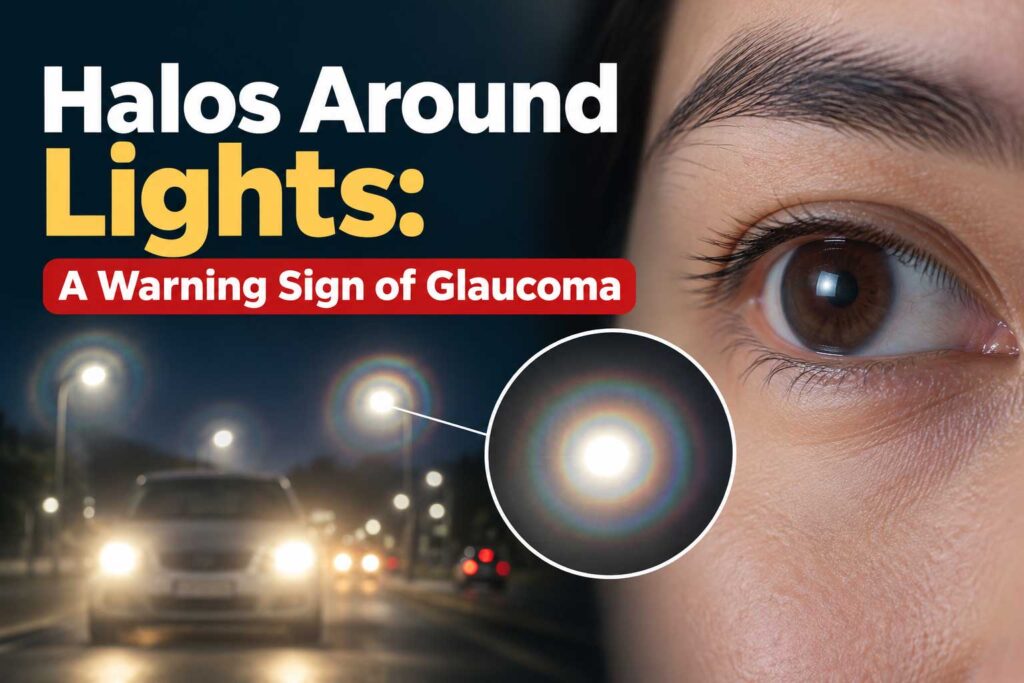
You look at a streetlamp at night and see a soft ring of color circling it. You blink. It stays. This is not a trick of your eyes adjusting to darkness. It can be a symptom of glaucoma, and it deserves attention.
Why Glaucoma Causes Halos Around Lights
Glaucoma raises pressure inside the eye. This pressure builds when fluid does not drain properly from the front part of the eye. As pressure rises, it pushes against the cornea, the clear dome covering the eye’s surface. The cornea swells slightly, even in ways too small to notice without an exam. That swelling scatters light as it passes through the eye. The brain interprets this scattered light as a halo, a bright ring surrounding the light source.
This symptom shows up most often in acute angle-closure glaucoma. In this type, the drainage angle inside the eye closes suddenly. Pressure spikes fast. The cornea swells quickly, and halos appear along with other symptoms. Chronic open-angle glaucoma, the more common form, builds pressure slowly. Halos can still occur, but they tend to be milder and easier to miss.
Other Symptoms That Often Come With Halos
Halos rarely appear alone in an eye emergency. Watch for these symptoms together:
- Sudden eye pain, often severe
- Blurred vision that does not clear
- Redness in the eye
- Headache, sometimes mistaken for a migraine
- Nausea or vomiting
- Vision loss at the edges of your sight
If halos appear alongside pain, nausea, or sudden vision changes, treat this as urgent. Acute angle-closure glaucoma can damage the optic nerve within hours. Permanent vision loss can follow if pressure stays high without treatment.
Who Should Worry Most About This Symptom
Certain people face higher risk for angle-closure glaucoma. Filipinos, along with other East and Southeast Asian populations, show higher rates of this condition compared to Western populations. Farsightedness, or hyperopia, also raises risk, since farsighted eyes tend to have shallower drainage angles. Age plays a role too. Risk increases after 40, and rises further after 60.
Women face higher risk than men, largely due to eye anatomy. A family history of glaucoma adds further risk. If you fall into one or more of these groups and start noticing halos around lights, schedule an eye exam soon rather than waiting.
What Happens During a Glaucoma Check
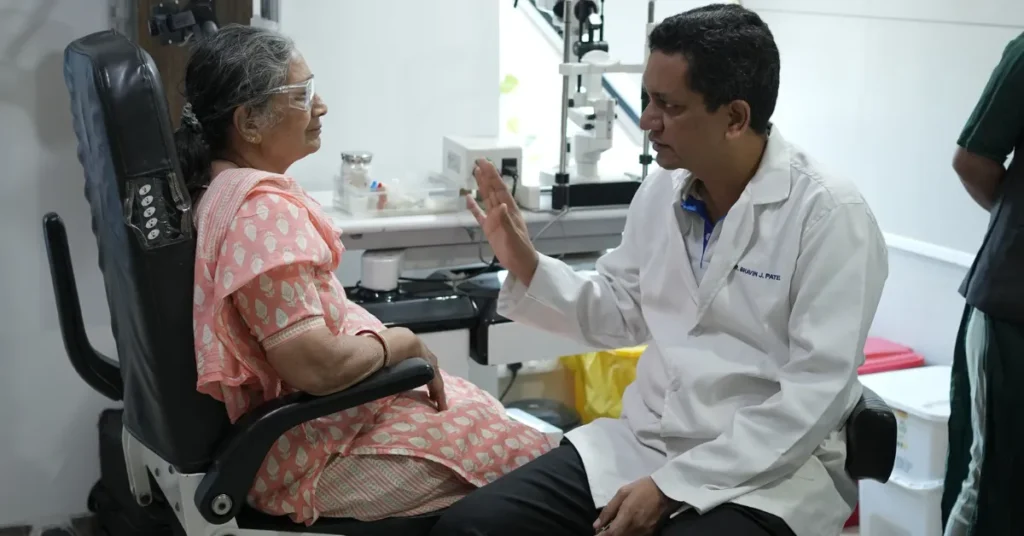
An eye doctor measures eye pressure using a tool called a tonometer. This test takes seconds and causes no pain. The doctor also examines the drainage angle using a technique called gonioscopy, which shows whether the angle is open, narrow, or closed. A dilated eye exam lets the doctor check the optic nerve for signs of damage.
These tests together tell the doctor whether halos are linked to glaucoma or to something else, such as cataracts, dry eye, or corneal conditions unrelated to pressure.
When to Seek Immediate Care
Sudden halos paired with eye pain, redness, and blurred vision call for same-day care. Angle-closure glaucoma is a medical emergency. Go to an eye clinic or emergency room immediately rather than waiting for a scheduled appointment. Fast treatment, often through medication or a laser procedure, can relieve pressure and protect vision.
Halos that appear gradually, without pain, still warrant a checkup. Chronic glaucoma often produces no pain at all, which makes routine eye exams the only reliable way to catch it early.
Protecting Your Vision Going Forward
Glaucoma cannot be reversed once nerve damage occurs. Treatment focuses on stopping further damage, not restoring vision already lost. This makes early detection critical. Regular eye exams, especially after age 40, catch pressure changes before symptoms like halos appear.
If you notice halos around lights, do not dismiss the symptom. Book an eye exam, describe exactly what you see, and mention how long the halos have lasted. This detail helps your doctor determine whether the cause is urgent or something to monitor over time.
Simple Habits That Support Eye Pressure Control
Diet and daily habits will not cure glaucoma, but certain choices support overall eye health and may ease pressure on an already strained drainage system.
- Stay hydrated throughout the day instead of drinking large amounts of water at once, which can cause a temporary pressure spike
- Limit caffeine if you already carry a glaucoma diagnosis, since high intake may raise eye pressure briefly
- Keep blood pressure and blood sugar under control, since both conditions affect blood flow to the optic nerve
- Avoid sleeping face-down or with your head lower than your body for long periods, since this position raises eye pressure
- Wear sunglasses with UV protection outdoors to reduce strain on the eyes
None of these steps replace medical treatment. They work alongside regular checkups and prescribed medication, not instead of them.