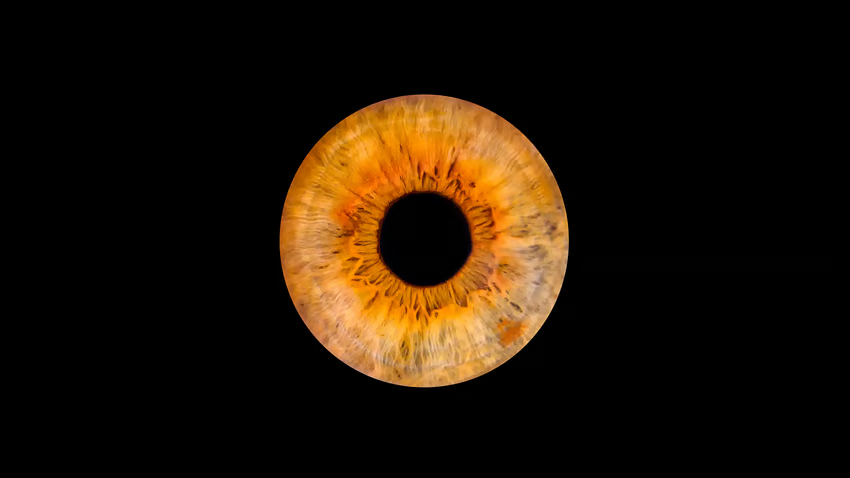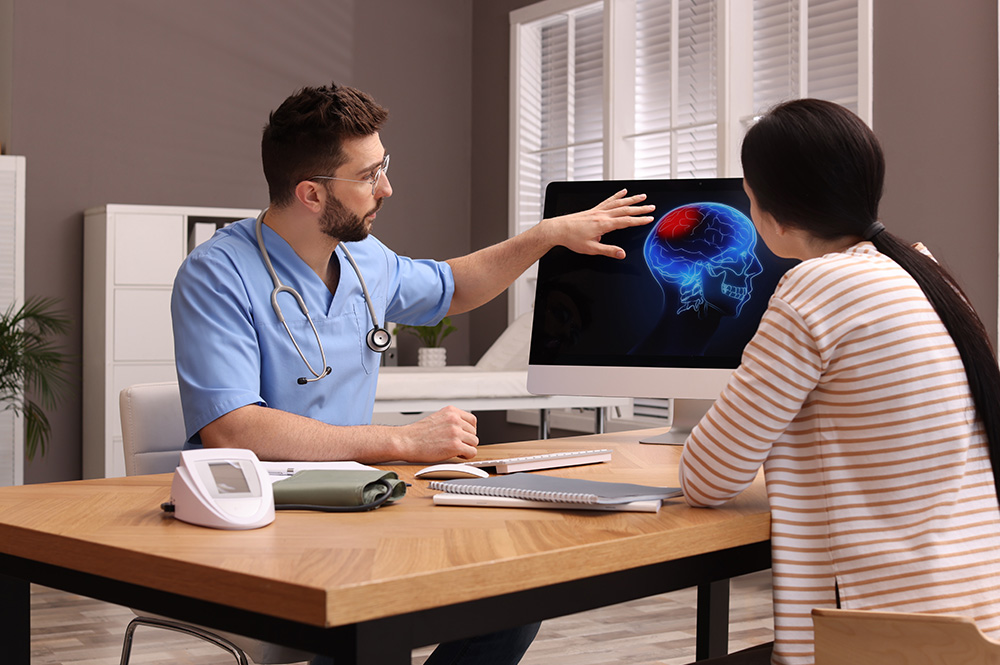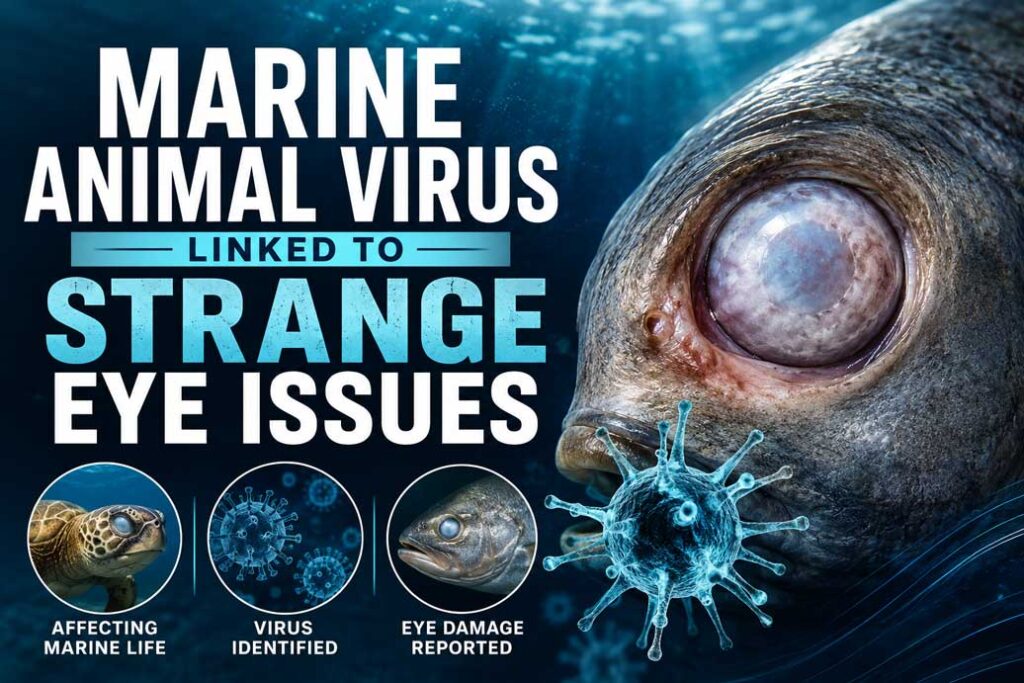
A virus once linked only to marine animals is now under investigation for causing severe eye infections in humans. Researchers uncovered the connection after several patients developed unusual eye inflammation that doctors could not explain through standard testing.
The discovery raised concern among eye specialists, virologists, and public health researchers. It also exposed how little we still know about viruses living in oceans and coastal ecosystems.
The infections are rare. Still, doctors say the symptoms can become serious if ignored.
Scientists Trace Eye Infections to a Marine Virus
Researchers identified the virus after examining patients with severe uveitis. Uveitis is inflammation inside the eye. It affects deeper eye structures and can damage vision permanently.
Doctors initially tested patients for:
- Bacterial infections
- Fungal infections
- Common viral diseases
- Autoimmune conditions
Results kept returning negative.
That forced researchers to use genetic sequencing on fluid samples taken directly from infected eyes. The analysis revealed traces of an orthoreovirus linked to marine animals.
The finding surprised researchers because this strain had never been connected to human disease before.
Marine orthoreoviruses normally exist in:
- Fish
- Crustaceans
- Marine invertebrates
- Aquatic wildlife
Researchers now believe some strains may cross into humans under certain conditions.
Why This Discovery Matters
The human eye is vulnerable to environmental exposure.
Unlike many internal organs, your eyes stay exposed to air, water, dust, and microorganisms every day. Ocean water can carry bacteria, parasites, and viruses that enter through tiny surface tissues.
Researchers believe the virus may enter through:
- Direct seawater exposure
- Eye contact with contaminated hands
- Handling seafood or marine animals
- Water splashes during swimming or surfing
Doctors involved in the investigation noticed many patients recently visited beaches or worked around marine environments before symptoms appeared.
That pattern became a major clue.
Symptoms Doctors Are Watching Closely
These infections do not behave like regular pink eye.
Most patients developed symptoms deeper inside the eye. The inflammation became painful and aggressive in some cases.
Common symptoms include:
- Severe eye pain
- Intense redness
- Blurred vision
- Sensitivity to light
- Floaters or dark spots
- Sudden vision changes
- Persistent eye pressure
Some patients described the pain as a deep ache behind the eye.
Others reported sudden difficulty focusing after swimming or spending time near coastal water.
Doctors warn that delayed treatment may lead to:
- Glaucoma
- Cataracts
- Retinal damage
- Permanent vision loss
If symptoms appear after ocean exposure, early examination matters.
What Makes Uveitis Dangerous
Uveitis affects internal eye structures, not just the outer surface.
That difference matters.
Many people ignore redness and assume they have mild irritation or standard conjunctivitis. Uveitis can progress quietly while inflammation damages sensitive eye tissue.
The condition may affect:
- The iris
- Retina
- Choroid
- Vitreous cavity
Once inflammation reaches those areas, vision damage may become harder to reverse.
Eye specialists often need advanced imaging and laboratory testing to identify the cause.
Treatment depends on how early doctors detect the inflammation.
How Researchers Found the Virus
Modern genetic sequencing played a major role in solving the mystery.
A decade ago, doctors might have labeled these infections as “unknown viral inflammation.” New sequencing tools now allow laboratories to identify genetic material from organisms that standard tests miss.
Researchers extracted fluid from infected eyes and searched for viral RNA fragments.
That process exposed the marine orthoreovirus signature.
The discovery also showed how newer diagnostic methods are reshaping infectious disease research.
Doctors are now identifying pathogens that previously escaped detection.
Ocean Health and Human Health Are Connected
This case supports the growing “One Health” approach in medicine.
The idea is simple:
Human health, animal health, and environmental health are connected.
When marine ecosystems change, disease patterns may change too.
Researchers are investigating whether environmental pressure may influence viral behavior in ocean ecosystems.
Several possible factors include:
Ocean Warming
Warmer water changes marine habitats.
Some viruses reproduce faster in warmer environments. Marine species under stress may also become weaker hosts, allowing viruses to spread more easily.
Coastal Pollution
Pollution affects water quality and marine immune systems.
Runoff, sewage discharge, and industrial waste may alter how microorganisms behave in seawater.
Increased Human Exposure
More people now spend time in:
- Beaches
- Diving locations
- Surfing areas
- Coastal resorts
That increases opportunities for human exposure to marine pathogens.
Better Detection Tools
Researchers also admit these infections may have existed for years without identification.
Improved sequencing now helps scientists detect unusual pathogens faster.
Who May Face Higher Risk
Researchers still need more data, but several groups may face increased exposure risk.
These include:
- Surfers
- Divers
- Fishermen
- Seafood handlers
- Coastal workers
- Marine researchers
People wearing contact lenses near ocean water may also face added risk if contaminated water becomes trapped around the eye.
Open eye irritation may create another pathway for infection.
Practical Ways to Protect Your Eyes
Doctors are not asking people to avoid beaches or ocean activities completely.
They are encouraging better eye protection habits.
Simple precautions may lower exposure risk significantly.
Wear Protective Goggles
Use sealed swimming goggles during:
- Surfing
- Diving
- Open-water swimming
- Snorkeling
This reduces direct seawater contact with the eyes.
Avoid Touching Your Eyes
Do not rub your eyes after:
- Handling seafood
- Touching marine animals
- Swimming in ocean water
Wash your hands first.
Rinse Eyes With Clean Water
Fresh water rinsing may help remove irritants and microorganisms after ocean exposure.
Remove Contact Lenses Carefully
Never clean contact lenses with tap water or seawater.
Replace lenses immediately if exposed to contaminated water.
Watch for Symptoms
Seek medical care quickly if you notice:
- Eye pain
- Sudden redness
- Vision changes
- Light sensitivity
Early treatment improves outcomes.
Doctors Still Have Many Questions
Researchers are still trying to understand several critical details.
Current investigations focus on:
- Identifying the exact marine host
- Tracking where the virus exists geographically
- Understanding transmission patterns
- Measuring how often infections occur
- Studying whether mild cases go unnoticed
Scientists also want to know whether the virus affects organs beyond the eye.
Right now, confirmed cases appear limited.
Still, researchers say awareness matters because unusual infections often remain underreported during early discovery stages.
Could Climate Change Influence Future Infections?
Some researchers believe changing oceans may increase contact between humans and unfamiliar microorganisms.
Climate shifts already affect:
- Fish migration
- Harmful algae blooms
- Marine disease outbreaks
- Coastal water conditions
As ocean ecosystems shift, viruses may move into new species or environments.
That does not mean every beach visit is dangerous.
It does mean public health agencies may need stronger environmental monitoring in coastal regions.
Why Eye Specialists Are Paying Attention
Eye doctors often become the first people to detect emerging infectious diseases.
Many viruses leave visible signs inside the eye before patients develop other symptoms.
This discovery reminds specialists to consider environmental exposure during diagnosis.
Questions about recent swimming, diving, or seafood handling may now become more important during unexplained eye inflammation cases.
Hospitals may also expand laboratory testing for rare pathogens.
What This Means for the Future
The ocean contains millions of microorganisms that scientists still do not fully understand.
Most are harmless.
Some may help medicine in the future through new antibiotics or biological discoveries.
Others may create unexpected health risks.
This marine virus case shows how human activity and environmental exposure continue to intersect in new ways.
Researchers are still in the early stages of understanding the threat level.
For now, awareness and fast medical attention remain the strongest defenses.
FAQ
What virus caused the human eye infections?
Researchers identified a marine orthoreovirus linked to aquatic animals. Scientists found the virus through genetic sequencing of infected eye fluid.
Can ocean water infect your eyes?
Ocean water may contain bacteria, viruses, and parasites. Direct exposure can irritate or infect the eyes under certain conditions.
What are the symptoms of viral uveitis?
Symptoms may include:
- Eye pain
- Redness
- Blurred vision
- Light sensitivity
- Floaters
- Vision loss
Is this infection common?
Current cases appear rare. Researchers are still studying how often infections happen and who faces the highest risk.
Should swimmers avoid beaches?
Doctors are not advising people to avoid beaches. Protective goggles, hand washing, and avoiding eye rubbing can help reduce exposure risk.
Can contact lenses increase infection risk?
Contact lenses may trap contaminated water against the eye. Proper lens hygiene becomes important after ocean exposure.
When should you see a doctor?
Seek medical attention immediately if you develop severe redness, eye pain, or vision changes after swimming or handling marine animals.