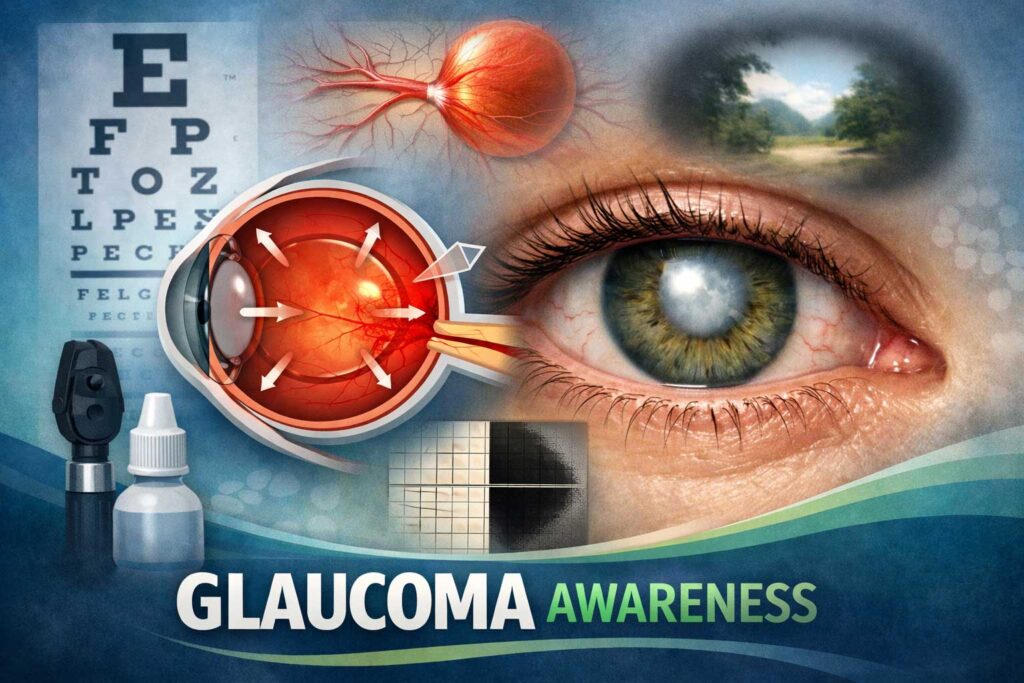
Stop Glaucoma Before Vision Loss Starts
You may not notice the damage.
But glaucoma is already working in the background.
How can you stop it?
What’s Causing the Damage?
Glaucoma harms the optic nerve.
It often starts with a pressure buildup inside the eye.
Your eye produces fluid constantly.
If that fluid can’t drain well, pressure rises.
This pressure slowly damages the nerve that connects your eye to your brain.
Who’s at Risk?
Ask yourself:
Are you over 40?
Does anyone in your family have glaucoma?
Do you have diabetes?
Do you take steroids regularly?
Have you had eye injuries?
If you answered yes to any of these, your risk is higher.
Early Glaucoma Has No Symptoms
You could feel fine.
You could see fine.
And still be losing vision.
The damage starts at the edges—your side vision.
You may not notice until your field of view shrinks.
Once that happens, the damage is permanent.
How to Catch It Early
Only a full eye exam can find glaucoma early.
What to expect:
A check of your eye pressure
A look at your optic nerve
A visual field test
A scan of the eye’s drainage system
If it’s been years since your last eye exam, schedule one now.
How to Lower Eye Pressure
You can’t reverse nerve damage.
But you can slow or stop it.
Here’s what doctors use:
Prescription eye drops
Some help fluid drain. Others reduce fluid production.Oral medicine
Usually used with drops to bring pressure down faster.Laser therapy
Opens drainage channels. Quick and often done in a clinic.Surgery
Creates a new drainage path for severe cases.
Your doctor will recommend one or more, based on how advanced your glaucoma is.
What You Can Do Today
Start with simple actions:
Book an eye exam
Take medications exactly as prescribed
Don’t skip follow-up visits
Share your family history with your doctor
Watch for changes in your side vision
Stay consistent.
Even missing a few doses of eye drops can raise pressure again.
Small Changes That Help
Lifestyle matters too.
Stay active. Regular exercise may help lower eye pressure.
Limit caffeine. It can raise pressure in the short term.
Elevate your head slightly when you sleep.
Stay hydrated, but avoid large amounts all at once.
Protect your eyes from injury.
These won’t cure glaucoma, but they support your treatment.
What Happens Without Action?
If you wait too long:
Vision loss becomes noticeable
Daily tasks become harder
Night vision fades
You may lose independence
Blindness becomes permanent
Many people don’t realize they have glaucoma until it’s too late.
That doesn’t have to be you.
What to Ask at Your Next Eye Visit
What’s my eye pressure?
How healthy is my optic nerve?
Do I need a visual field test?
What treatment is best for me?
Get clear answers.
Take notes if needed.
Bring a list of your medications.
You Have a Choice
You can take control now.
Glaucoma is slow, but it’s steady.
The damage adds up quietly.
Doing nothing leads to blindness.
But with the right steps—
You can protect your vision for years.