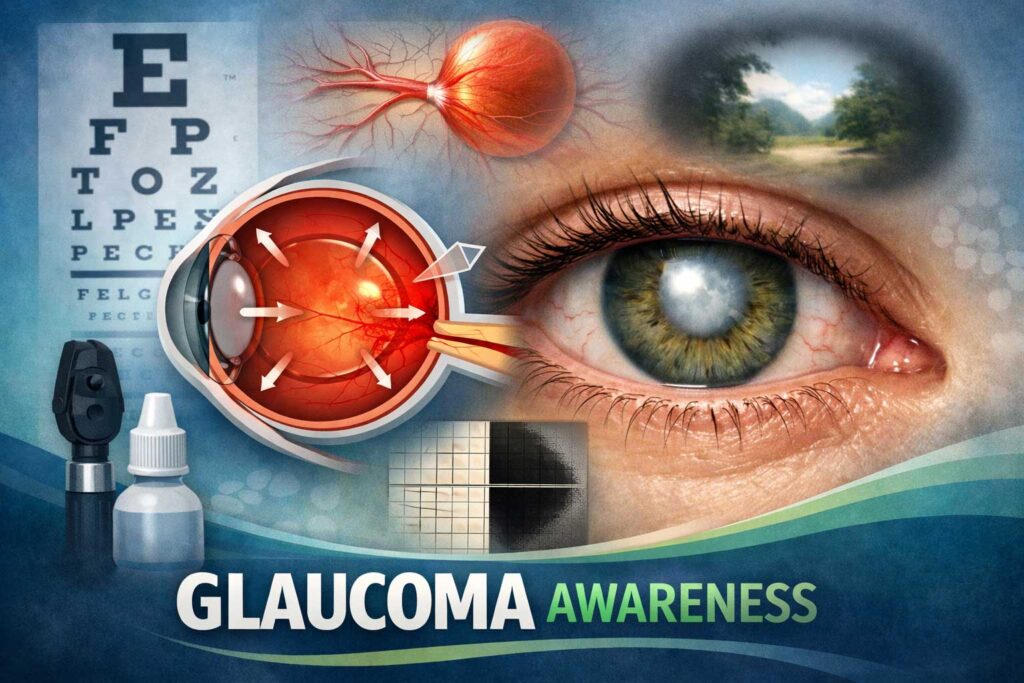
Supplements That May Support Eye Pressure
Can supplements help lower eye pressure?
You may be wondering if adding certain nutrients can support your glaucoma treatment.
Some research suggests a few options may help.
They don’t replace medication—
but they may support eye health in the long run.
Let’s take a closer look.
1. Omega-3 Fatty Acids
Omega-3s are found in fish like salmon, sardines, and mackerel.
They may:
Support blood flow to the optic nerve
Reduce inflammation
Improve overall eye function
Fish oil supplements are widely available.
Aim for 1,000 mg daily, or eat fish 2–3 times per week.
Check with your doctor before adding high-dose omega-3s, especially if you take blood thinners.
2. Ginkgo Biloba
Ginkgo may help blood circulation in small vessels—
including those in the eye.
Some small studies suggest it may:
Improve visual field in early glaucoma
Support optic nerve function
A typical dose ranges from 120–240 mg per day.
Watch for side effects like headaches or stomach upset.
Avoid combining with aspirin or blood thinners.
3. Vitamin C
Vitamin C is an antioxidant.
Some studies link high-dose vitamin C (1,000 mg or more) with temporary pressure drops.
It may:
Support collagen in the eye
Act as a mild diuretic
Try citrus fruits, strawberries, and bell peppers—
or consider a supplement.
Large doses may cause upset stomach or kidney stones in some people.
4. Vitamin E
Vitamin E may protect cells from damage, including those in the optic nerve.
It’s found in:
Almonds
Sunflower seeds
Avocados
Supplements (often 100–400 IU daily)
It’s fat-soluble, so don’t take large doses without supervision.
Too much can interfere with blood clotting.
5. Magnesium
Magnesium helps relax blood vessels and may improve circulation.
It’s found in:
Spinach
Beans
Nuts
Whole grains
Supplements (200–400 mg daily)
Magnesium may help with nighttime pressure spikes or poor blood flow in the optic nerve.
It may cause diarrhea in high doses—start low and increase gradually.
6. Coenzyme Q10 (CoQ10)
CoQ10 supports energy production in cells.
It may also protect retinal cells under pressure stress.
You’ll find it in:
Organ meats
Supplements (30–200 mg daily)
Some early studies show it may slow nerve damage in glaucoma.
It’s often used alongside other treatments.
Ask your doctor before combining with blood pressure meds or blood thinners.
7. Alpha Lipoic Acid
This antioxidant may support nerve health and reduce oxidative stress.
Common dose: 100–600 mg per day
You’ll find it in:
Spinach
Broccoli
Red meat
Supplements
It’s generally well tolerated but may lower blood sugar—be cautious if you take diabetes medication.
8. Lutein and Zeaxanthin
These nutrients are found in the retina and may protect against damage.
You’ll get them from:
Kale
Corn
Egg yolks
Supplement blends for eye health
Some studies focus more on macular degeneration—
but supporting retinal health may help with pressure-related stress, too.
9. Bilberry
Bilberry extract contains anthocyanins, which may improve blood vessel health in the eye.
It’s similar to blueberry but stronger in supplement form.
Possible effects:
Improved night vision
Better circulation
Antioxidant protection
Start with 80–160 mg daily.
Look for standardized extracts (25% anthocyanins).
Questions to Ask Before Taking Any Supplement
Does this interact with my current medication?
What dose is safe for me?
Will this replace any nutrients I’m already getting?
Has this been studied in glaucoma patients?
Bring supplements to your eye appointments.
Keep a list for your provider to review.
Do Supplements Work Alone?
No.
Supplements support—but don’t replace—your care plan.
You still need:
Prescription drops or pills
Regular eye pressure checks
Follow-ups with your specialist
Healthy habits (sleep, exercise, diet)
Use supplements as a tool—
not a solution.
How to Choose a Quality Supplement
Not all brands are equal.
Look for:
Third-party testing (like USP or NSF)
Clear ingredient labels
No unnecessary fillers
Batch or lot number on the package
Buy from trusted pharmacies or sellers.
If a supplement sounds too good to be true, skip it.
A Sample Daily Plan
Here’s what a simple supplement plan might look like:
Morning: Omega-3 + CoQ10
Afternoon: Vitamin C + magnesium
Evening: Lutein/Zeaxanthin blend
Optional: Ginkgo or bilberry
Keep it simple.
Start with one or two, then adjust as needed.
Final Thoughts
Glaucoma affects pressure in the eye—
but pressure control isn’t just about prescriptions.
Some supplements may support your care.
Start small.
Track how you feel.
Talk with your doctor.
You may find that a few added nutrients help support your long-term vision.