Revolutionizing Cataract Surgery: A New Era of Precision and Recovery
For decades, cataract surgery has stood as one of modern medicine’s most successful and transformative procedures, restoring clear vision to millions. However, the field is not resting on its laurels. A quiet but profound revolution is underway, driven by technological leaps that are making the procedure safer, more precise, and the recovery faster than ever before. We are entering a new era where cataract surgery is becoming a truly bespoke vision correction experience.
Beyond the Cloud: The Rise of Laser-Guided Precision
The traditional method of cataract surgery, while effective, relies heavily on the steady hands and experience of the surgeon for key steps. The new frontier is defined by femtosecond laser technology. Think of this as moving from manual tools to a computer-guided laser scalpel.
This advanced laser allows surgeons to plan and perform the most delicate steps of the operation with micron-level accuracy before even making an incision. Here’s what it transforms:
- The Incision: The laser creates perfectly sized and positioned corneal incisions, promoting better sealing and potentially reducing induced astigmatism.
- The Capsulotomy: Perhaps its most critical role, the laser creates a perfectly circular opening in the lens capsule. This precision is vital for optimal lens positioning and long-term stability.
- Lens Fragmentation: The laser softens and breaks up the cloudy lens, requiring significantly less ultrasound energy to remove it. This is a game-changer for recovery.
Why Less Energy Means More Comfort
The reduction in ultrasound energy, known as phacoemulsification power, is a direct contributor to a gentler procedure. Less energy inside the eye translates to:
- Reduced inflammation and swelling
- Faster healing of the corneal endothelium (the eye’s vital inner layer)
- A quicker return to clear, stable vision—often within hours, not days
The Power of Personalized Lens Calculations
A successful outcome isn’t just about removing the clouded lens; it’s about replacing it with the perfect new one. The latest advancement lies in sophisticated biometric analysis and IOL (Intraocular Lens) power calculation formulas.
Modern devices use optical coherence tomography (OCT) and other technologies to map the eye in extraordinary detail, measuring not just length and curvature but also the depth and tilt of key structures. Newer, “next-generation” formulas (like Barrett, Hill-RBF, and Kane) use complex algorithms and artificial intelligence to process this data, accounting for individual anatomical variations that older formulas could miss.
The result? A dramatic improvement in hitting the refractive target. More patients than ever are achieving their desired visual outcome, whether that’s distance, intermediate, or near vision, with reduced dependence on glasses.
A Suite of Advanced Lens Options: Tailoring Your Vision
The cataract surgery conversation has evolved from “when should I have it?” to “what kind of vision do I want afterward?” The new generation of premium intraocular lenses turns the procedure into an opportunity for vision correction.
- Extended Depth of Focus (EDOF) Lenses: These lenses provide a continuous range of high-quality vision from distance to intermediate, and often good near vision, with minimal visual disturbances like halos.
- Trifocal and Multifocal Lenses: Designed with multiple focal points, these lenses aim to provide clear vision at distance, intermediate (computer), and near (reading) ranges, offering the highest potential for spectacle independence.
- Light-Adjustable Lenses (LALs): This groundbreaking technology allows the lens power to be fine-tuned after it has been implanted. Using a special light treatment, your surgeon can make micro-adjustments to optimize your vision in the weeks following surgery, an unprecedented level of customization.
- Toric Lenses: Specifically designed to correct pre-existing astigmatism during the cataract procedure, eliminating the need for additional surgeries or glasses to correct this condition.
The Patient Journey: What This Revolution Feels Like
For the patient, these technological integrations create a seamless and reassuring experience.
From Consultation to Recovery
Pre-Operative Planning: Your surgical plan is no longer a standard template. It’s a 3D, data-driven blueprint of your eye, customized by advanced diagnostics and AI-driven calculations.
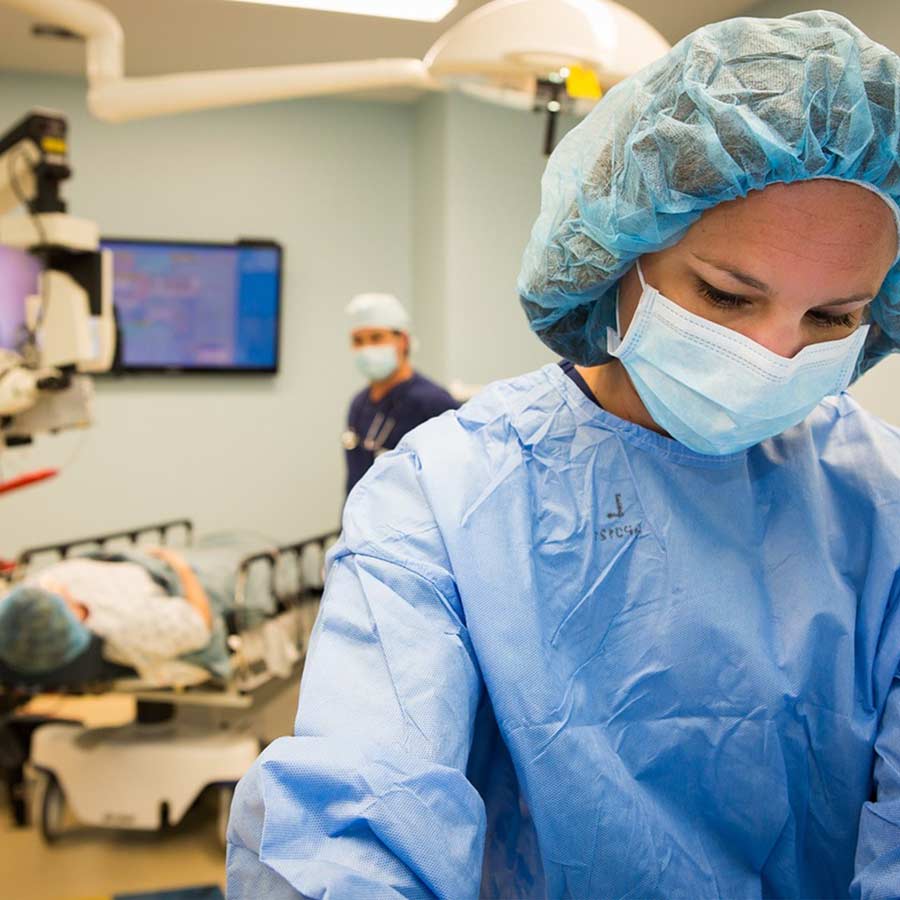
The Day of Surgery: The procedure itself is often quicker and more comfortable. The laser step adds only minutes but contributes immensely to precision and gentleness.
The Recovery Period: This is where patients notice the biggest difference. With reduced inflammation and optimized lens placement, many report:
- Remarkably clear vision within the first 24 hours
- Minimal discomfort, often managed with over-the-counter pain relief
- A rapid return to daily activities like driving, reading, and using digital devices
- Greater predictability and satisfaction with their final visual outcome
Looking Forward: The Future is Clear
The revolution in cataract surgery is a testament to the power of integrating robotics, artificial intelligence, and advanced materials into medical practice. We are moving past the one-size-fits-all approach to a model of personalized, precision ophthalmology.
Future horizons include even more advanced IOL materials, continued refinement of AI in surgical planning, and the integration of augmented reality in the operating room to provide surgeons with real-time, data-overlay guidance.
For anyone facing cataract surgery, this is an incredibly exciting time. The procedure is no longer just about removing a cloudy lens—it’s an opportunity to upgrade your visual system with a level of safety, precision, and customization that was unimaginable a generation ago. The goal is no longer just restored sight, but optimized vision tailored to your lifestyle, ushering in a new era of clarity and visual freedom.