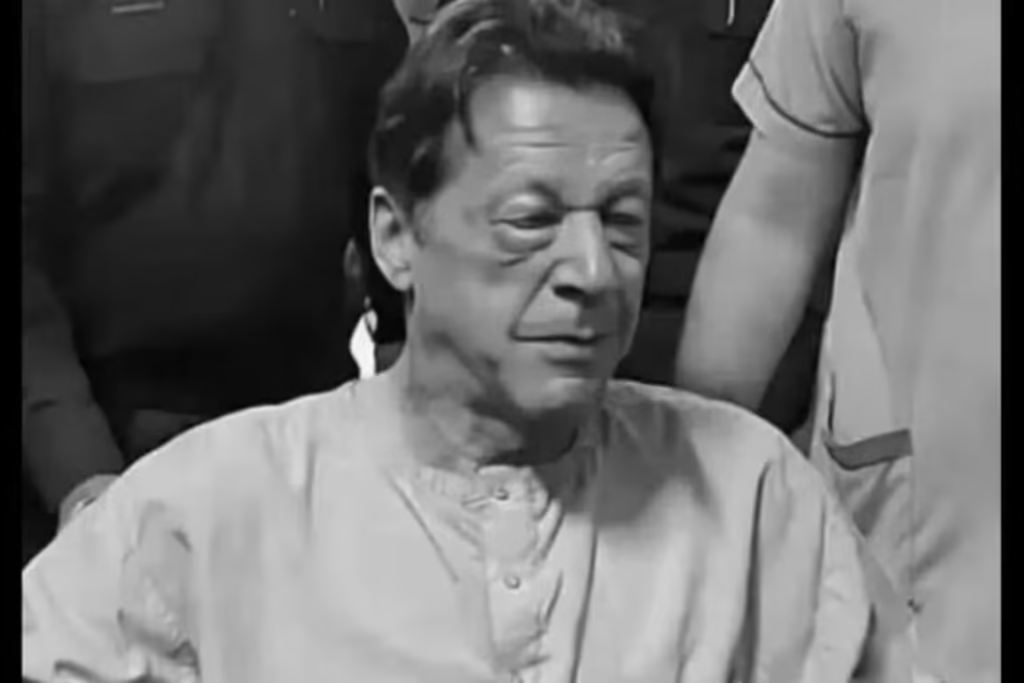
Imran Khan Gets 4th Eye Injection in Hospital, Then Returned to Jail
Pakistan’s political landscape remains tense as former Prime Minister Imran Khan, currently in jail, was taken to a hospital for the fourth time to receive an injection for a recurring eye problem. The treatment was carried out under tight security, and he was immediately sent back to prison afterward. This has once again sparked debate about his health, legal situation, and Pakistan’s judicial system.
The development, first reported by Firstpost, highlights a growing pattern of medical interventions that are now becoming a major issue in the country’s political climate. Supporters have raised concerns about what they call “medical neglect,” while authorities insist that proper procedures are being followed. The situation brings up serious questions about the link between health, justice, and politics in Pakistan.
The Fourth Injection: What Happened?
Imran Khan, 72, chairman of Pakistan Tehreek-e-Insaf (PTI), has been dealing with a persistent eye condition during his time in custody. According to hospital sources, the latest injection was given at a specialized facility under strict security.
Key details include:
- The injection was intended to treat a worsening retinal condition
- No complications were reported during the procedure
- The treatment lasted around 45 minutes under police supervision
- Doctors said the injection was necessary to prevent further vision loss
This is the fourth injection Khan has received since his arrest. Medical experts say this raises concerns about how serious his condition may be. While prison authorities claim he is receiving proper care, the repeated hospital visits suggest a long-term issue that needs ongoing specialist attention.
Understanding the Eye Condition
Official medical details remain limited, but sources suggest the issue involves retinal damage, possibly worsened by stress and lack of rest. Retinal conditions often require precise treatment, and injections are commonly used for diseases like macular degeneration or diabetic retinopathy. However, Khan’s exact diagnosis has not been publicly confirmed.
The Legal Maze: Why Imran Khan Remains in Custody
Khan’s medical situation cannot be separated from his legal troubles. He has been in custody since August 2023 following his arrest in the Toshakhana corruption case. Since then, multiple additional cases have been filed against him, including charges related to violence, terrorism, and sedition.
Major cases include:
- Toshakhana Case: Alleged concealment of gifts worth millions
- May 9 Mayhem: Charges linked to violence after his arrest
- Cipher Case: Alleged mishandling of classified diplomatic documents
- Multiple FIRs: Over 150 cases filed since 2022
The legal process has been complicated. Lower courts have granted bail in some cases, but higher courts have often overturned those decisions. This ongoing back-and-forth has kept Khan in jail and drawn criticism from human rights groups, who claim political persecution.
The Hospital-to-Jail Shuttle
A key concern in this latest incident is how quickly Khan was returned to jail after treatment. He was not kept for observation or overnight care. Instead, he was taken straight back to Adiala Jail in Rawalpindi.
This has become routine. Each hospital visit involves heavy security, road closures, and large police deployments. Critics argue this approach is both risky and a strain on public resources.
Political Implications: A Nation Divided
Khan’s health has now become a political issue. His party, PTI, claims the government is deliberately denying him proper care. Meanwhile, the government says he is being treated like any other prisoner.
PTI’s Response
PTI leaders quickly condemned the situation. Party spokesperson Shibli Faraz called it “inhumane” and accused the government of “medical torture.”
The party demanded:
- A full medical board review
- International human rights intervention
- Better healthcare access, possibly at home
- Medical parole
Supporters have also held protests in cities like Lahore, Islamabad, and Peshawar, adding to political tensions.
Government’s Defense
Government officials rejected these claims, calling them “political theater.” Information Minister Attaullah Tarar stated that Khan is receiving high-quality medical care.
The government argues:
- All treatments are approved by prison medical boards
- Khan has access to private doctors
- Security concerns prevent home detention
- Multiple doctors have examined him
However, critics say the government has not allowed a fully independent medical review, which international groups have recommended.
The Human Cost of Political Turmoil
Behind the politics is a human story. Imran Khan, once a cricket star and national leader, is now dealing with serious health concerns while in prison.
Factors affecting his condition may include:
- Long periods of confinement
- Limited outdoor access
- Restricted diet
- Ongoing stress from legal battles
Medical experts warn that eye conditions can worsen quickly under stress. Delayed or missed treatments could lead to permanent damage.
Historical Context: A Pattern of VIP Prisoner Treatment
Pakistan has seen similar cases before. Former Prime Minister Nawaz Sharif was granted medical parole in 2019, and Benazir Bhutto faced health issues during her exile.
However, Khan’s situation is different due to the number of cases against him and the speed at which they have developed. The refusal to grant medical parole could set a new legal precedent.
International Reactions
The international community has expressed concern over Khan’s situation.
Responses include:
- The US called for transparency and due process
- The UN raised concerns about possible unlawful detention
- Amnesty International demanded proper medical access
- Human Rights Watch pointed to political interference
Despite this, there has been little direct pressure on Pakistan due to its strategic importance.
What Comes Next?
Khan’s legal team is expected to request medical bail again. The courts will have to decide between legal procedures and humanitarian concerns.
Possible outcomes include:
- Medical parole granted
- Continued treatment under custody
- International involvement
- Worsening health leading to a crisis
Each scenario carries political consequences in an already divided country.
The Bottom Line
Imran Khan’s fourth eye injection is more than just a medical update—it reflects the deeper political struggle in Pakistan. While both sides continue to argue, the key question remains: can health and justice be handled separately from politics?
As Khan returns to his cell, supporters remain concerned about his condition. For many, each hospital visit is a sign of hope, while each return to jail raises new worries.
This story goes beyond one individual. It reflects a nation trying to balance politics, justice, and humanity—and searching for clarity in a time of uncertainty.