Eyesight and Driving: Why Vision Problems Matter Behind the Wheel
Imagine driving along a familiar road when a pedestrian or cyclist suddenly enters your field of vision. Even a small blind spot, blurred vision or difficulty judging distances can affect how quickly you recognise a potential danger.
A fatal traffic accident in Singapore has brought attention to the relationship between eye health and road safety after a driver argued that his deteriorating eyesight affected his judgement. However, the High Court dismissed his appeal, questioning why he had not worn glasses despite having several diagnosed eye conditions.
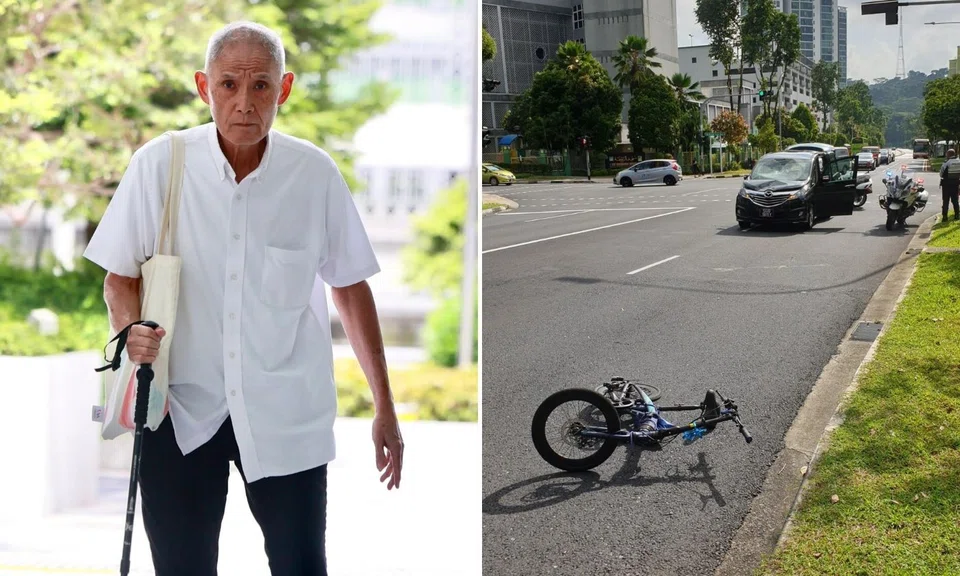
The case involved Pang Meng Seng, the 70-year-old co-founder of the New Ubin Group, who was previously convicted of careless driving causing death. His appeal raised important questions about glaucoma, myopia, astigmatism and age-related macular degeneration, as well as the responsibility of drivers to understand their visual limitations.
Beyond the legal proceedings, the case highlights why regular eye examinations and appropriate vision correction are important, particularly for older adults who continue to drive.
Singapore High Court Rejects Driver’s Appeal Following Fatal Collision
The accident happened at approximately 9.15am on March 2, 2022, at the junction of Bukit Batok East Avenue 2 and Avenue 5 in Singapore.
Pang Meng Seng ran a red traffic light and collided with a cyclist, 41-year-old Myanmar national Chit Oo Maung, who was crossing the road.
The cyclist was knocked unconscious and transported to the National University Hospital. He suffered serious injuries, including skull fractures and bleeding in his brain, before dying later that evening.
Pang subsequently pleaded guilty to one charge of careless driving causing death. He received a prison sentence of 10 months and two weeks and was disqualified from driving for eight years.
On November 5, 2026, Pang appealed against his sentence, arguing that he had not realised how much his eyesight had deteriorated and that his visual problems had affected his judgement.
However, a three-judge panel led by Justice Sushil Sukumaran Nair dismissed the appeal. The proceedings also brought attention to his previous eye diagnoses and the fact that he was not wearing glasses when the collision occurred.
Four Eye Conditions Raised During the Appeal
One of the central issues during the appeal was Pang’s medical history. He had previously been diagnosed with glaucoma, myopia and astigmatism, with his glaucoma diagnosis dating back to March 2015.
Three additional medical reports were submitted by his lawyer during the appeal. These documents described further deterioration in his vision, including the development of a scotoma, or blind spot, as well as age-related macular degeneration.
1. Glaucoma
Glaucoma is a group of eye diseases that damage the optic nerve, which carries visual information from the eye to the brain. The condition is frequently associated with elevated eye pressure, although it can also develop when eye pressure is within the statistically normal range.
One of its major concerns is that vision loss can occur gradually. Peripheral vision may become affected, and some people do not recognise the changes until considerable damage has occurred.
Advanced glaucoma can create difficulties with navigating surroundings, recognising objects outside the central field of vision and detecting potential hazards while driving.
Vision already lost because of glaucoma generally cannot be restored. However, appropriate treatment and regular monitoring can help slow or prevent further damage.
2. Myopia
Myopia, commonly called nearsightedness, makes distant objects appear blurred while nearby objects may remain relatively clear.
People with myopia can have difficulty reading road signs, recognising vehicles at a distance and identifying hazards approaching from farther away.
Prescription glasses or contact lenses can usually correct the focusing problem associated with myopia, although the appropriate prescription must be determined through an eye examination.
3. Astigmatism
Astigmatism occurs when the cornea or lens has an irregular curvature, causing light to focus unevenly inside the eye.
This can result in blurred or distorted vision at different distances. Some people also experience eyestrain, headaches or difficulty seeing clearly at night.
Corrective glasses or contact lenses can help compensate for the irregular focusing, depending on the severity and individual visual requirements.
4. Age-Related Macular Degeneration
Age-related macular degeneration, commonly known as AMD, affects the macula, the central part of the retina responsible for detailed vision.
People with AMD may experience blurred central vision, difficulty recognising faces, distorted straight lines or problems reading small text. The condition does not typically affect peripheral vision in the same way as glaucoma.
Its impact can be particularly important for drivers because central vision is needed to recognise traffic signs, read road markings and identify objects directly ahead.
These four conditions affect different parts of the visual system. Having more than one eye condition can make it especially important to receive a comprehensive assessment rather than relying on a simple vision screening.
Why the Judge Questioned the Decision Not to Wear Glasses
During the appeal, the judge examined the medical reports and questioned the defence’s explanation of Pang’s visual impairment.
Although the initial arguments appeared to suggest that both eyes had been affected by the scotoma, the court noted that the blind spot was present only in his left eye.
His right eye had astigmatism, myopia and age-related macular degeneration. The judge observed that glasses could address the refractive problems affecting that eye.
This led to a question about why Pang had not been wearing glasses when the accident happened. The defence explained that he had followed his doctor’s instructions to use prescribed eye drops daily after receiving treatment and had not been specifically told to wear glasses or return for additional examinations.
However, the prosecution challenged the suggestion that the deterioration in his eyesight was something he could not reasonably have anticipated.
It highlighted that Pang had already been diagnosed with glaucoma in March 2015, approximately seven years before the fatal collision.
Eye Tests and the Importance of Declaring Existing Conditions
Another important detail raised during the appeal involved Pang’s eyesight assessment on November 9, 2020.
He had undergone an annual eyesight test in accordance with Singapore Traffic Police requirements. However, the prosecution pointed out that he had not accurately declared his glaucoma on the relevant form.
Consequently, the assessment’s conclusion that he was fit to drive without glasses was not considered accurate because the information supplied about his medical history was incomplete.
This part of the case highlights an important distinction between passing a basic vision assessment and having a complete understanding of one’s eye health.
A standard vision screening does not necessarily detect every eye disease. Glaucoma, for example, can require additional examinations even when someone can still read letters clearly on a vision chart.
What Eye Examinations Can Detect
People concerned about deteriorating eyesight can benefit from a comprehensive examination by an optometrist or ophthalmologist. Depending on their symptoms and medical history, the assessment may include several procedures.
- Visual acuity testing: Measures how clearly a person can see letters, numbers and objects at different distances.
- Tonometry: Measures the pressure inside the eyes and helps assess glaucoma risk.
- Visual field testing: Checks peripheral vision and can identify areas where vision may be missing.
- Optical coherence tomography (OCT): Produces detailed images of retinal structures and the optic nerve to help identify damage associated with certain eye conditions.
- Retinal examination: Allows an eye-care professional to examine the retina and macula for signs of disease, including AMD.
- Refraction testing: Determines whether someone needs corrective lenses and helps establish the appropriate prescription.
These examinations serve different purposes. A person may have good central visual acuity but still experience peripheral vision loss or other problems that could affect everyday activities.
When Should You See an Eye Doctor?
Changes in eyesight should not automatically be dismissed as a normal part of ageing. Some eye conditions develop gradually, making it difficult for individuals to recognise that their vision is becoming worse.
Consider arranging an eye examination if you experience any of the following symptoms:
- Increasing difficulty reading road signs or recognising distant objects.
- Blurred or distorted vision that does not improve.
- Missing areas or dark patches in your field of vision.
- Difficulty seeing clearly in low-light conditions.
- Frequent changes in your glasses prescription.
- Distorted straight lines or difficulty recognising faces.
- Persistent visual discomfort or unexplained changes in vision.
Seek urgent medical attention if you suddenly experience significant vision loss, a curtain-like shadow across your vision, new flashes of light or a sudden increase in floaters. Severe eye pain, particularly when accompanied by blurred vision, redness or nausea, also requires urgent assessment.
Sudden visual symptoms can sometimes indicate serious conditions, including retinal detachment, vascular problems or acute glaucoma. Prompt medical evaluation is important.
For drivers, another practical step is to inform the relevant eye-care professional that you regularly drive. This helps ensure that the assessment considers the visual demands of operating a vehicle.
In Singapore, drivers should also comply with Traffic Police medical and eyesight requirements and accurately disclose relevant diagnosed conditions when completing required assessments.
The dismissal of Pang Meng Seng’s appeal demonstrates why existing eye conditions, appropriate corrective eyewear and accurate medical declarations matter when assessing driving fitness. Anyone experiencing changes in vision should arrange a comprehensive eye examination rather than waiting for symptoms to become more noticeable.
Source: Stomp – Fatal crash appeal over eyesight defence dismissed. Additional case reporting was attributed to Shin Min Daily News and the Attorney-General’s Chambers.