Tattoos in Youth Led to Vision Problems: W5 Investigates
A shocking investigative report by W5 has uncovered a disturbing link between tattoos obtained during adolescence and severe vision problems later in life. The report, which aired on May 7, 2026, details several cases involving individuals who received tattoos as teenagers and later developed debilitating eye conditions. The findings are raising urgent questions about tattoo ink safety and the possible long-term health risks associated with body art.
For years, tattoos have been viewed primarily as a form of personal expression. However, medical researchers are beginning to examine the biological impact of tattoo ink inside the body. Dermatologists, toxicologists, and ophthalmologists are now paying closer attention to how ink particles may affect organs far beyond the skin.
The Hidden Danger in Tattoo Ink
Tattoo ink is far more complex than many people realize. It contains pigments, preservatives, and chemical carriers, some of which may include heavy metals such as cadmium, chromium, cobalt, and lead. Once injected into the dermis, the body’s immune system attempts to process these foreign substances.
Researchers have found that tattoo ink particles may not remain permanently trapped in the skin. Some microscopic particles can travel through the lymphatic system and bloodstream, eventually reaching other parts of the body. According to experts featured in the W5 investigation, the eyes may be especially vulnerable because of their delicate blood vessels and sensitive tissue structures.
The report highlighted several concerning findings:
- Microscopic ink particles were reportedly detected in the choroid layer of the eye in patients experiencing vision problems.
- Chronic inflammation linked to ink breakdown may contribute to uveitis, a painful inflammation affecting the middle layer of the eye.
- Individuals with large dark-colored tattoos on the torso and arms appeared to show a higher correlation with worsening vision issues.
When Tattoos Become a Medical Concern
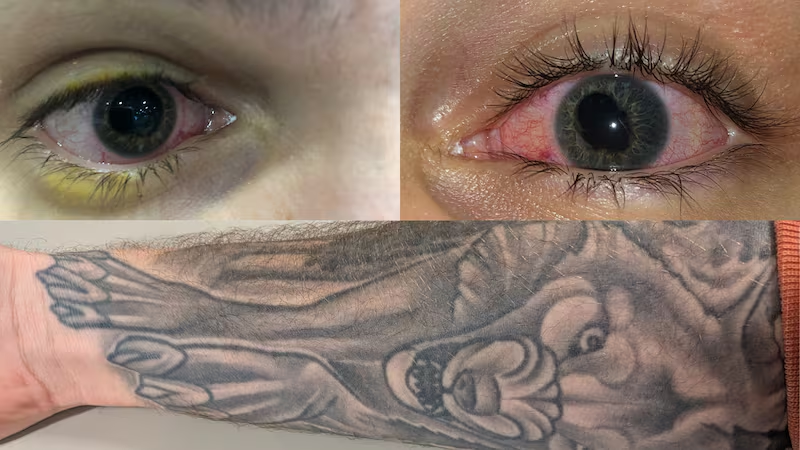
One of the most compelling stories in the investigation involved Sarah, a 28-year-old woman who received her first tattoo at age 14. Years later, she began suffering from blurry vision, light sensitivity, and recurring headaches. Initial examinations failed to identify the cause. Standard eye disease tests returned negative results, leaving doctors searching for answers.
It was only after advanced toxicology testing and skin biopsy analysis that specialists began investigating a possible connection between her tattoos and her symptoms.
According to the report, her case mirrors others documented by medical professionals:
- Symptoms often appear 5 to 10 years after getting tattooed.
- Common complaints include blurred vision, floaters, eye pain, headaches, and sensitivity to light.
- Many patients are initially misdiagnosed with migraines, dry eye syndrome, or anxiety-related conditions.
Medical experts refer to this emerging condition as tattoo-associated uveitis (TAU). Although the condition first appeared in dermatology literature years ago, investigators believe it may be more common than previously thought, especially among individuals tattooed during adolescence.
Why Getting Tattoos Young May Increase the Risk
Medical specialists interviewed during the investigation explained that adolescent bodies may respond differently to tattoo ink compared to adults. During puberty and early adulthood, the immune and lymphatic systems remain highly active, which could influence how ink particles spread through the body.
Several biological factors may contribute to the increased risk:
- Faster metabolism during youth may accelerate the breakdown of tattoo pigments.
- Developing immune systems can react more aggressively to foreign substances.
- Growth-related body changes may affect how tattoo pigments migrate beneath the skin.
The W5 report noted that individuals who received tattoos between ages 13 and 18 appeared more likely to develop related symptoms later in life compared to those who waited until adulthood.
Black and Red Tattoo Inks Under Scrutiny
Not all tattoo inks behave the same way inside the body. The investigation focused heavily on black and red pigments due to their chemical composition and historical links to adverse reactions.
Black inks may contain carbon-based compounds and impurities such as polycyclic aromatic hydrocarbons (PAHs), while some red pigments have long been associated with allergic and inflammatory reactions.
Researchers featured in the report observed:
- Black ink particles were detected in retinal tissue samples from some symptomatic patients.
- Red pigments appeared more likely to trigger inflammatory or autoimmune-type responses.
- Blue and green inks showed lower migration rates, though risks were still present.
One ophthalmologist interviewed in the report stated that some young adults seeking treatment displayed eye damage more commonly seen in significantly older patients.
Growing Debate Over Tattoo Ink Regulation
The W5 investigation has intensified discussions surrounding tattoo ink regulation in Canada and other countries. Critics argue that tattoo inks are not currently subjected to the same level of long-term safety testing required for many other substances introduced into the human body.
The report presented several concerning statistics:
- More than half of surveyed tattoo parlors reportedly used inks containing at least one heavy metal flagged by European regulators.
- Among tattooed individuals under 30 surveyed for the report, many reported unexplained vision-related symptoms within years of getting tattooed.
- Very few participants suspected their tattoos could be linked to their eye problems.
The investigation also noted that several ink manufacturers declined to comment publicly on the findings, further fueling concerns about transparency within the industry.
Protecting Your Eye Health
Medical experts stress that the report is not intended to create panic or discourage all tattoos. Instead, it highlights the importance of awareness, informed decisions, and proper medical monitoring.
Experts recommend the following precautions for tattooed individuals:
- Schedule regular comprehensive eye examinations.
- Inform your doctor about your tattoo history if you develop unexplained vision problems.
- Seek immediate medical attention if you experience floaters, eye pain, blurred vision, or light sensitivity.
Parents are also encouraged to carefully consider the long-term implications before allowing teenagers to receive large or multiple tattoos.
The Bottom Line
Tattoos remain an important form of art and personal identity for millions of people worldwide. However, the W5 investigation suggests they may also carry health risks that researchers are only beginning to understand. The possibility that tattoo ink could contribute to serious eye conditions years later has become a growing area of medical concern.
The individuals featured in the investigation made decisions based on the information available at the time. As scientific understanding evolves, experts believe consumers deserve clearer safety information and stronger industry oversight.
For anyone experiencing unexplained vision issues after getting tattooed, consulting an ophthalmologist may be an important first step.