A Birthday You Might Not Realize Comes With a Health Perk
You notice the fine print on your reading glasses a little more than you used to. Maybe your eyes take longer to adjust when you walk from bright sunlight into a dim room. These small changes creep in quietly, often around the same time many people hit a big birthday milestone.
If you’re turning 60 in England, Wales, or Northern Ireland this year, there’s a practical reason to pay attention beyond the candles on your cake. Once you reach 60, you become entitled to a free NHS-funded sight test, for life, regardless of your income or health history.
Why Glaucoma UK Is Highlighting This Now
Glaucoma UK, the charity dedicated to preventing avoidable sight loss, is using National Eye Health Week to remind people born in 1966 to take advantage of this entitlement. Joanne Creighton, the charity’s Chief Executive, has pointed out that a 60th birthday is not just a personal milestone, it’s also the moment your eye care becomes fully funded.
The timing matters. Many eye conditions, including glaucoma, develop without obvious symptoms until damage has already occurred. Waiting for vision problems to show up before booking a test can mean missing the window when treatment works best.
What Makes Glaucoma Different From Normal Aging Eyes
Glaucoma develops when pressure builds up inside the eye and gradually damages the optic nerve, the pathway that carries visual information to your brain. Because peripheral vision fades first, many people don’t notice anything is wrong until central vision starts to suffer too.
Your risk climbs after age 60, and it climbs further if you have a family history of the condition or if you’re of African or Asian descent. People with diabetes or high blood pressure also face increased risk, which is part of why regular screening matters even without symptoms.
What Happens During a Free NHS Eye Test
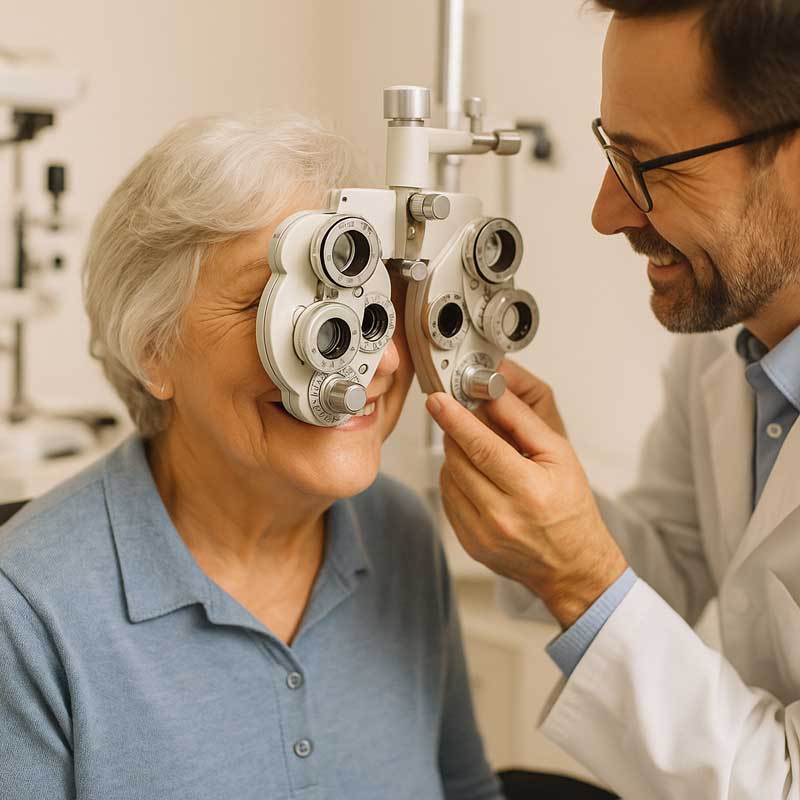
A standard sight test takes about 20 to 30 minutes. Your optometrist will typically use tonometry to measure the pressure inside your eye, a quick and painless process involving either a small puff of air or a brief touch from a probe.
Depending on what they find, they may also perform gonioscopy to examine the drainage angle of your eye, or visual field testing to check whether any peripheral vision has already been affected. Some practices use optical coherence tomography, which creates detailed images of the optic nerve to track subtle changes over time.
How to Book Yours
You don’t need a referral from your doctor. Any high street optician, including Specsavers, Boots, or Vision Express, along with independent practices, can carry out an NHS-funded test once you confirm your age. Bring identification that shows your date of birth, such as a passport, driving licence, or bus pass.
When you call to book, mention that you’d like a comprehensive test that includes glaucoma screening, especially if you have a family history of the condition or haven’t had an eye exam in the past two years.
When to Seek Care Sooner Than Your Next Scheduled Test
Most glaucoma develops slowly, but a rarer form called acute angle-closure glaucoma can come on suddenly and requires emergency treatment. Seek urgent medical attention if you experience sudden severe eye pain, blurred vision with halos around lights, redness, nausea, or vomiting linked to your eye.
Don’t wait for your next scheduled appointment if you notice a sudden change in your vision or persistent eye discomfort. These symptoms need prompt evaluation, not a routine booking.
Make the Most of Your Milestone Year
Turning 60 opens the door to an entitlement that’s easy to overlook among the birthday cards and celebrations. Call your local optician this week, mention your eligibility, and book a comprehensive sight test that includes glaucoma screening. It costs nothing, takes half an hour, and could catch a problem while it’s still treatable.