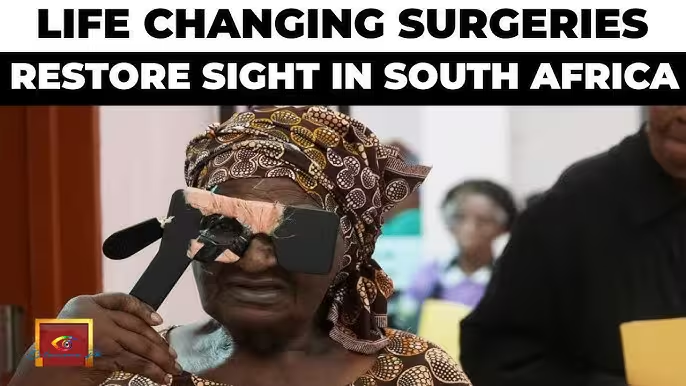
Miracle Eye Surgery Marathon Restores Sight in South Africa
Imagine a world of shadows and shapes suddenly snapping into sharp, vibrant focus. For dozens of South Africans, this was not a dream but a stunning reality, thanks to a whirlwind medical mission that unfolded like a carefully orchestrated miracle. In an extraordinary display of skill, compassion, and logistical prowess, a team of surgeons recently completed a high-volume cataract surgery marathon, restoring the precious gift of sight to patients who had been waiting in darkness.
More Than Surgery: A Life-Changing Event
Cataracts, a clouding of the eye’s natural lens, are the leading cause of blindness worldwide. While the surgery to remove them is common and highly effective, access remains a critical barrier for many in underserved communities. The consequences extend far beyond blurred vision. Loss of independence, increased vulnerability, and deep social isolation are often the harsh companions of treatable blindness.
This surgical initiative was designed to shatter those barriers. Targeting individuals for whom cost and healthcare access were insurmountable hurdles, the program identified patients living with advanced cataracts. For many, their world had slowly narrowed to a milky haze, stripping away their ability to work, care for family, and engage with their community.
The “Wow” Factor: Precision at Pace
The term “marathon” is aptly chosen. This was not a single procedure in a quiet operating room; it was a high-efficiency, assembly-line model of care perfected for impact. The clinical team, comprising both local and international ophthalmologists, nurses, and support staff, worked in seamless synchrony.
- Pre-operative Screening: A meticulous process where patients were carefully assessed to ensure they were ideal candidates for the swift surgical model.
- The Surgical Hub: Multiple operating stations were active simultaneously. Each surgeon, utilizing the efficient phacoemulsification technique (using ultrasonic waves to break up the cloudy lens), performed dozens of surgeries per day.
- Swift Recovery & Aftercare: The modern procedure involves tiny incisions, allowing for rapid healing. Patients were monitored closely and provided with protective shields and clear post-operative instructions to safeguard their new vision.
The atmosphere was one of focused energy. Every minute counted, but never at the expense of safety or surgical excellence. The goal was clear: maximum impact in minimum time.
The Moment of Revelation: Bandages Come Off
If the surgery itself was a feat of medical engineering, the post-operative follow-up was the emotional crescendo. This is where the true “miracle” unfolded, in quiet moments filled with palpable tension and joy.
One by one, eye patches were carefully removed. The reactions were universally profound, yet deeply personal. There were gasps, tears, and stunned silence. For some, it was the simple, overwhelming act of seeing a loved one’s face clearly for the first time in years. A grandmother could once again trace the features of her grandchild. A farmer could look across his fields with hope rather than uncertainty.
Ripple Effects: Sight Restored, Dignity Regained
The impact of restoring sight transcends the physical sense. It is a restoration of autonomy and personhood. Patients spoke of reclaiming their lives:
- Regaining the ability to perform daily tasks without assistance.
- Returning to work or small-scale trading to support their families.
- Re-engaging in social and community activities, ending a long period of isolation.
The economic and social burden of blindness on families and communities is immense. By restoring sight, this initiative didn’t just heal individuals; it strengthened the fabric of entire families and lifted a weight off community resources.
A Model for Global Eye Care
This South African story is a powerful beacon in the global fight against preventable blindness. It demonstrates that with the right model, expertise, and commitment, high-volume surgical outreach is not only possible but profoundly effective. It addresses the critical “last mile” problem in global health: delivering proven, life-changing treatments directly to the populations that need them most.
The success hinges on several key pillars:
- Partnership: Collaboration between international NGOs, local healthcare providers, and community leaders.
- Local Empowerment: Training and working alongside local medical staff ensures knowledge transfer and sustainable capacity building.
- Community Trust: Working within communities to identify patients and provide culturally competent care.
The Lasting Vision
As the surgical team packed up, they left behind more than just clear-eyed patients. They left a blueprint for hope. The “wow” of the event is not just in the staggering number of surgeries performed, but in the dignity and future returned to each person.
The story of this eye surgery marathon is a compelling reminder that in our advanced medical age, the line between a life of darkness and one of light can be as thin as a skilled surgeon’s incision, and as close as a well-organized mission of mercy. It challenges us to look at global health inequities not as insurmountable problems, but as puzzles waiting for the right combination of will, skill, and compassion to solve. For the patients who walked in guided by a hand and walked out seeing the path ahead, the world is now brilliantly, beautifully new.