AI Eye Scans Reveal Retinal Age and Predict Disease Risk
For centuries, the eyes have been called the windows to the soul. Now, thanks to groundbreaking artificial intelligence, they are becoming a clear window into our overall health and biological age. A revolutionary new study has demonstrated that a simple, non-invasive eye scan, analyzed by a sophisticated AI algorithm, can accurately determine your “retinal age” and, more importantly, flag your risk for serious diseases long before symptoms appear.
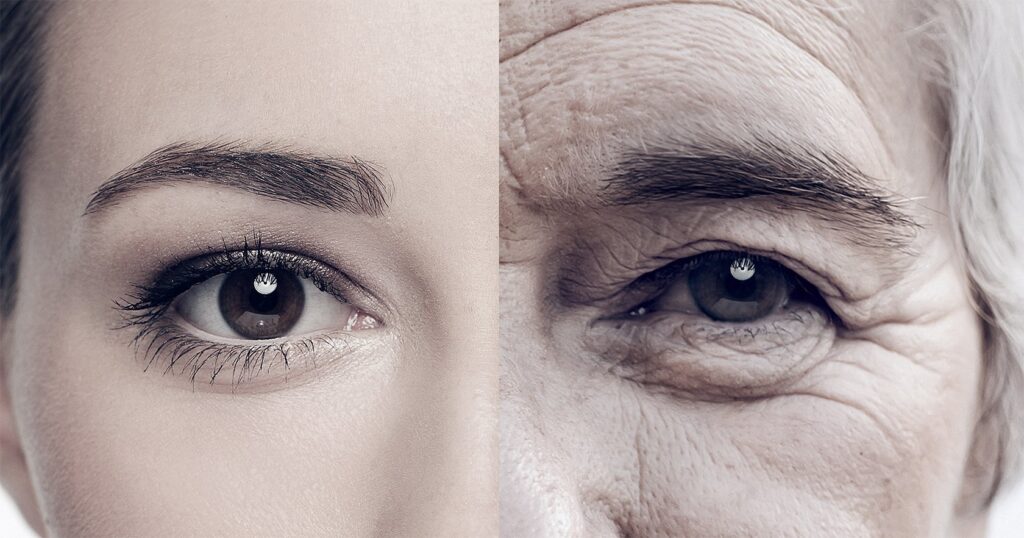
This isn’t science fiction. Researchers have developed a deep learning model capable of predicting a person’s age from a single photograph of the retina—the light-sensitive tissue at the back of the eye. But the real breakthrough lies in the “retinal age gap”—the difference between your biological age as predicted by the AI and your actual chronological age. This gap is emerging as a powerful new biomarker, with a larger gap being significantly linked to a higher risk of mortality and specific age-related diseases.
How Can a Simple Eye Photo Reveal So Much?
The retina is a unique outpost of the central nervous system, offering a direct, unobstructed view of blood vessels, nerves, and neural tissue. Changes in this delicate ecosystem often mirror changes occurring throughout the body.
The AI model was trained on over 130,000 retinal images from the UK Biobank, learning the subtle, complex patterns associated with healthy aging. When presented with a new scan, it doesn’t just count wrinkles; it analyzes a vast array of microscopic features invisible to the human eye, including:
- Blood vessel structure: Narrowing, twisting, or changes in the width of arteries and veins.
- Tissue texture and color: Subtle variations in the pigmentation and reflectivity of retinal layers.
- Optic disc and cup geometry: The shape and configuration of the spot where the optic nerve exits the eye.
- Presence of microscopic lesions: Early signs of damage that precede clinical disease.
By synthesizing this data, the AI generates a precise estimate of retinal biological age. A significant positive gap (where your retina appears older than you are) acts as a red flag, indicating accelerated biological aging.
The Retinal Age Gap: A Crystal Ball for Your Health?
The implications of this technology are profound. In validation studies, the AI’s predictions were strongly correlated with real-world health outcomes. Individuals with a larger retinal age gap faced a significantly increased risk.
1. Predicting Mortality Risk
The research found that for every one-year increase in the retinal age gap, there was a corresponding 2% increase in the risk of death from any cause over the following decade. This suggests the retina provides a holistic snapshot of systemic aging and vulnerability.
2. Flagging Specific Age-Related Diseases
Beyond overall mortality, a pronounced retinal age gap showed specific associations with major diseases:
- Cardiovascular Disease: The state of retinal blood vessels is a well-known indicator of cardiovascular health. The AI can detect vascular aging linked to high blood pressure, stroke risk, and heart disease.
- Neurological Conditions: Because the retina is neural tissue, its aging process is closely tied to brain health. An older retina was associated with cognitive decline and showed promise as a potential early marker for conditions like Parkinson’s and Alzheimer’s disease.
- Diabetic Complications: For the millions living with diabetes, regular retinal screening is already standard to check for retinopathy. This AI could provide an even earlier, more nuanced assessment of how diabetes is affecting the body’s microvasculature.
- Kidney Dysfunction: The study also noted links to impaired kidney function, highlighting how systemic metabolic and inflammatory processes leave their signature in the eye.
The Future of Preventative Medicine is in Sight
This technology promises to transform healthcare from a reactive model to a truly preventative one.
Transforming the Routine Eye Exam: What is currently a check for glasses or glaucoma could become a comprehensive health screening. An optometrist could capture a routine retinal image and, in minutes, receive a report on a patient’s biological aging and potential systemic risks.
Democratizing Health Risk Assessment: Retinal photography is quick, non-invasive, and relatively inexpensive compared to full-body MRI or complex blood panels. This makes widespread screening and longitudinal tracking feasible for large populations.
Supercharging Clinical Trials: Pharmaceutical researchers could use the retinal age gap as a sensitive, quantitative biomarker to see if new anti-aging or disease-modifying therapies are actually slowing biological aging at the cellular level, speeding up drug development.
Personalized Health Interventions: Knowing your retinal age gap could be the ultimate motivator for lifestyle change. It provides a tangible, biological measure that can track how improvements in diet, exercise, and management of conditions like hypertension are actually reversing cellular aging.
Ethical Considerations and the Path Forward
As with any powerful predictive technology, important questions arise. Who has access to this deeply personal biological data? How do we ensure it is used to empower patients and not discriminate in insurance or employment? Robust ethical frameworks and data protection laws must evolve alongside the science.
Furthermore, while the associations are strong, more research is needed to fully understand the causal pathways and to refine predictions for individual diseases. The goal is not to create anxiety but to provide a powerful tool for early action.
Conclusion: A Clear Vision for Healthier Aging
The development of AI that can read our biological age from an eye scan is a monumental leap forward. It underscores a fundamental truth in medicine: the body’s systems are deeply interconnected. Aging, and the diseases that accompany it, leaves a trace everywhere—and one of the clearest traces is found in the intricate landscape of the retina.
This technology moves us closer to a future where a five-minute, painless scan during a routine eye test can provide a early warning system for our most significant health threats. By revealing our retinal age, AI isn’t just predicting the future; it’s giving us the precious time and insight we need to change it. The window to a longer, healthier life may literally be right before our eyes.